The Waste Land (2025)
Sculpture in Process: The Ephemeral and the Material in the Work of Ivana Radovanović
The modernist paradigm of sculpture, from Rodin to minimalism, rested on the tenet that sculpture could be defined from within, through its formal properties, and the autonomy of the medium. Sculpture stood on the ground as a monolith, a vertical sign, always in relation to the landscape or architecture. Yet, with the advent of minimalism and post-minimalism in the 1960s, as Rosalind Krauss has shown, this model began to subside. Sculpture could no longer be defined as an autonomous object; instead, it became what she called a “negative category,” one that could only be determined in relation to what it was not: not architecture, not landscape. It was precisely this transformation that enabled what Krauss termed the expanded field of sculpture – a space in which sculpture ceased to be a self-sufficient object, only to became a differential practice of relations.
The recent works of Ivana Radovanović clearly align themselves within this theoretical discourse. Rather than emphasise the self-sufficiency of form and the modernist notion of autonomy, her work highlights processuality, revealing sculpture as a site of entanglement between the natural and the artificial, the material and the symbolic. In this sense, sculpture no longer presents itself as a self-contained object, but as a relational practice whose meaning emerges through the contexts and connections in which it is embedded.
“What are the roots that clutch, what branches grow
Out of this stony rubbish? Son of man,
You cannot say, or guess, for you know only
A heap of broken images, where the sun beats,
And the dead tree gives no shelter, the cricket no relief,
And the dry stone no sound of water...”
— T.S. Eliot, The Waste Land, 1922
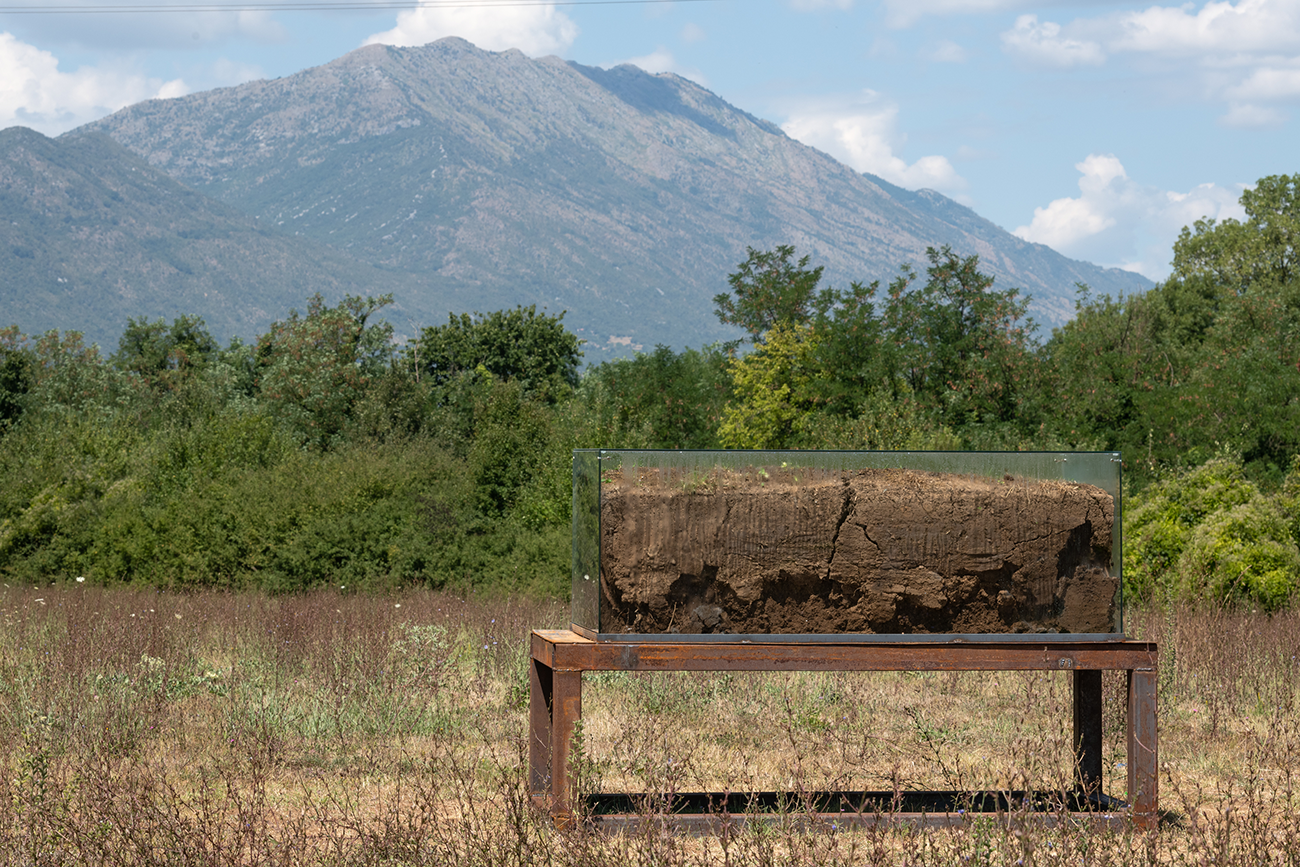
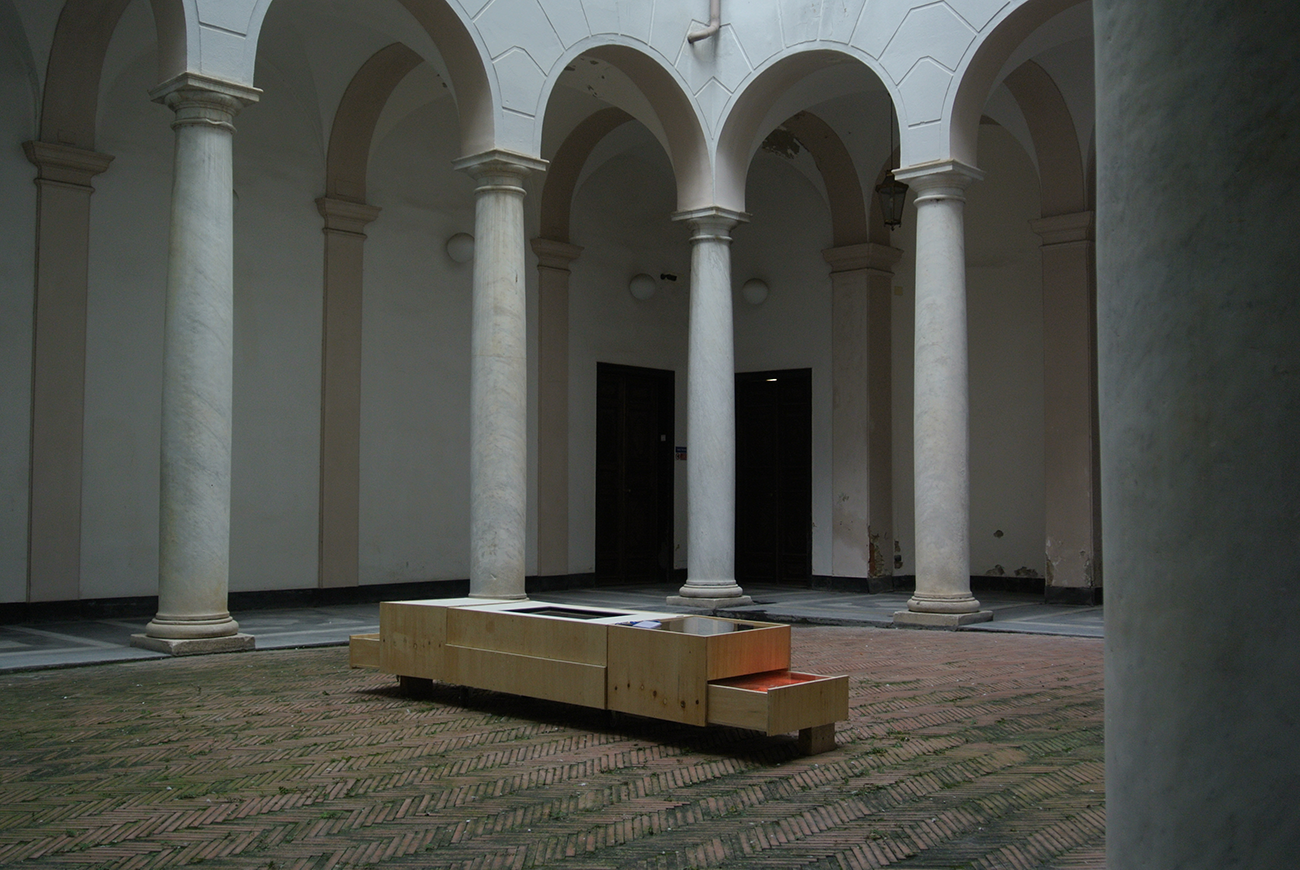
The formal structure of her piece The Waste Land is grounded in a simple yet highly suggestive arrangement: a block of soil, in its natural form, is raised from the ground and placed in a glass rectangular container, resting on a metallic construction. The transparency of the glass allows the viewer access from all sides, while the metallic pedestal stresses the weight and materiality. Yet in the soil, within the glass box, lies something not immediately visible: a buried sculpture from an earlier cycle (2018) – a jute figure undergoing decomposition, transformed not only materially but also ontologically. What in another context would be sculpture – a form, a figure, an aesthetic object – is now suppressed, covered, left to decay. The artwork becomes a process of disintegration, discernable only through the faint traces within the soil. The figure does not reveal itself in form, but in its vanishing. As Heidegger reminds us, the work of art is the setting into work of truth itself. In The Waste Land, truth does not lie in contour or form, but in the very event of what unfolds through decay and decomposition: the metamorphosis of formal shape and of the wider context of its return to the soil. The jute and wool sculpture – a figure of emptiness, dissolution, and transience – remains buried, but by this very act, it opens a space for truth: that materiality is always already buried in the soil, that every form decays, and that nature ultimately reclaims us into its obscured being. The glass container is thus not merely a frame for soil, but a prism of the world – a framework that allows us to look, while at the same time making us face the boundary of vision. We see the soil, but not what it conceals. Only by knowing what is buried does the work gain fullness: it becomes a space where the world strives to reveal, while the soil stubbornly conceals. A tension is thus formed between organic and inorganic, living and inert, natural fragments and artificial constructions. The work is not exhausted through the use of material, but unfolds as a sculptural situation in which the natural fabric of soil is transformed into an artefact. The Waste Land is, therefore, not merely a fragment of soil, but a time capsule, an archive of material transformation and the deconstruction of conceptual content.
In Radovanović’s work, soil is not a mere material to be fashioned, but what Heidegger refers to as Earth (Erde) – that which withdraws into concealment, remains self-secluding, and resists complete disclosure. The sculpture is not an act of representing the soil / earth, but an act of setting it forth in a space where it speaks through its concealment. It is the revelation of soil as a site of being, whereby sculpture is no longer a self-contained object, but an event of disclosure – the unveiling of the truth of material, time, and the human relation to the world. Heidegger teaches that art is always a site of tension between Earth and the World: the World as that which opens, giving horizon and meaning; the Earth as that which withdraws, conceals, and remains opaque. This encounter begets the truth. In The Waste Land, Radovanović materialises this struggle: what is hidden – the jute sculpture – becomes the truth of the work precisely through its withdrawal, through its disappearance into the soil. For this very reason, the sculpture belongs neither to pure form nor to mere material. It is an event in which earth and the world enter into relation: a site where truth is never exhausted, but is continually deferred, disclosed, and withdrawn. In this event, art is not a decoration of the world, but the very space in which the truth of human existence – its fragility, void, and transience – is set into the work.
This logic can be brought into dialogue with Hans Haacke’s Condensation Cube. In Haacke’s acrylic cube, water is enclosed, its processes of condensation and evaporation continuously unfolding in response to the environment. The physical process remains in constant interaction with the space. Yet, whereas Haacke insists on the circulation of natural processes within a closed system – a marker of modernist discourse – Radovanović takes a step further: she opens a space in which sculpture is exposed to decay, no longer a stable form but a testimony to transience. If Haacke’s work demonstrates the self-regulation of natural systems, Radovanović’s works reveal their inevitable entropy, the fragility of matter, and the disappearance of form – a paradigm of the postmodern horizon of sculpture.
Her work may also be interpreted within Jan Assmann’s theory of cultural memory, according to which buried sculptures, though formally deconstructed, persist as bearers of memory, summoned and re-actualised through the act of exhibition. The soil within the glass container thus becomes a medium of memory – not monumental and permanent, but in the form of traces of disappearance and transience. Cultural memory, Assmann argues, does not rest only on preservation, but on ritual renewal and the periodic reanimation of past meanings. In this sense, the buried sculpture, fragmented and decayed, lives on through the gesture of its re-exhibition. It does not function as the original artefact, but is re-contextualised into a new narrative, as a lieu de mémoire where collective and individual memory communicate between presence and absence, between what has vanished and what is evoked. The soil / earth, then, is not merely a material mass but an archive: in its concealment, it preserves a record of decay which, at the moment of unveiling, becomes a form of cultural memory.
For Radovanović, sculpture is no longer an enclosed object of contemplation, but a space of confrontation with entropy and the transience of the material world. Her works demonstrate that the notion of the expanded field of sculpture remains productive: it allows the artwork to be understood not as a self-sufficient medium, but as an open field of relations in which the organic and the constructed, the enduring and the perishable, the inner and the outer, continually struggle, intertwine, and shift.
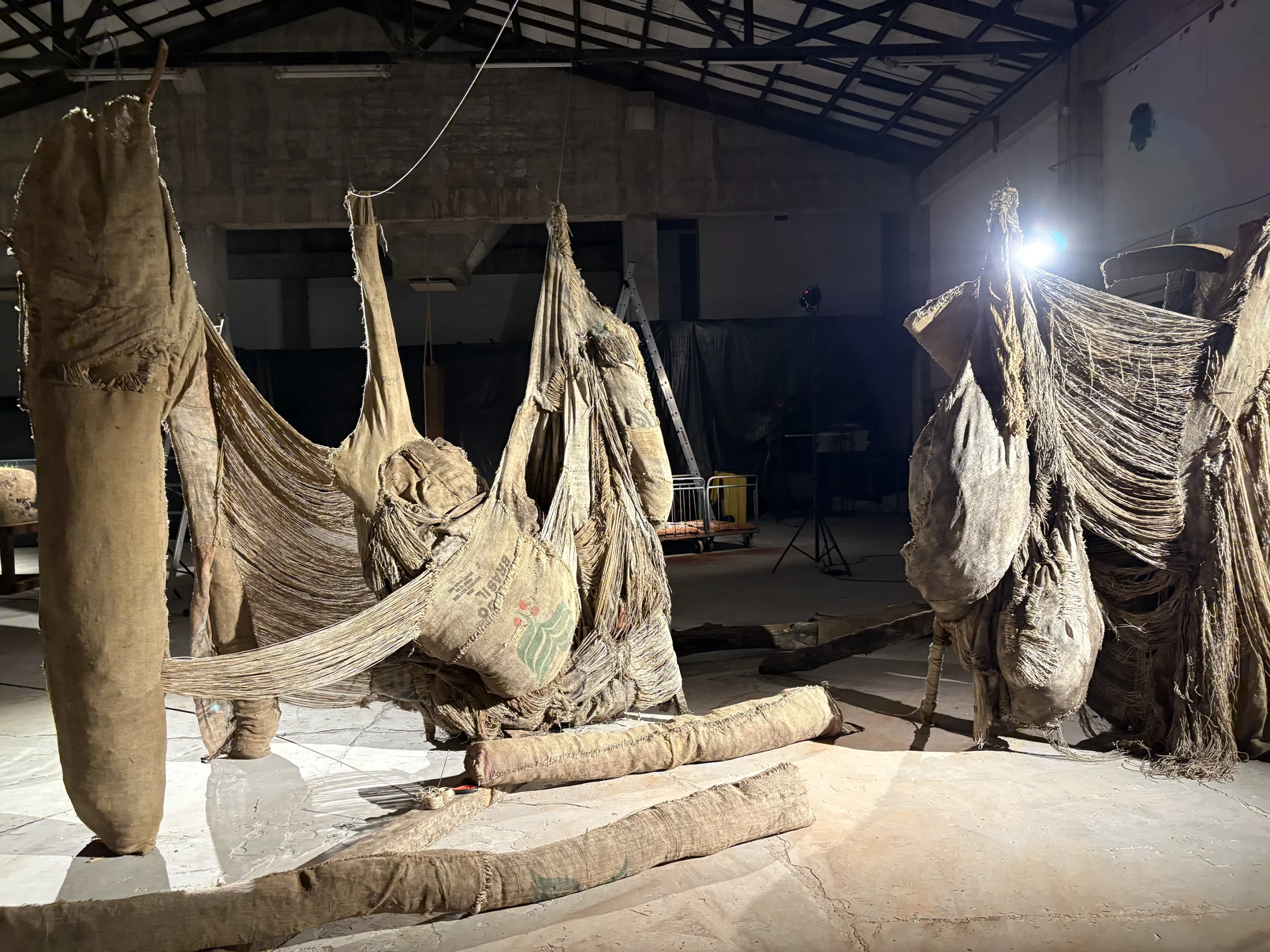
In Composition, materiality becomes the primary bearer of meaning. The spatial installation is built from materials central to her expressive corpus – jute, rope, fabric, and wood. This choice and treatment of materials inscribes itself as a critical layer of the work: material is not a neutral substance serving form, but an agent carrying its own identity, constituting both the plastic and the conceptual narrative of sculpture. Such an understanding brings the work into direct dialogue with the post-minimalist tradition, particularly with the art of Eva Hesse, where material is no longer subordinated to enduring form, but reveals its own sensitivity, fragility, and susceptibility to change. Lucy Lippard termed this the “sensual logic of materials,” where fibres, elasticity, and decay shape the meaning of the work. In this sense, Composition affirms that materiality is not passive but productive: through the fibres of jute and the tension of rope, through the worn and frayed fabric, it creates a narrative of transience, metamorphosis, and transformation. For Hesse, material was never a neutral carrier of form but the very source of meaning – its tendency to decay and change was part of the truth of the artwork. Similarly, Radovanović conveys the idea that material should not resist time, but try to do the very opposite by inscribing it: memorising its layers and opening itself to its traces and transformations.
The semantics of material thus place Composition in dialogue both with the legacy of post-minimalism and with philosophical traditions of thinking about art: showing how material, in its resistance and perishability, produces a space of truth that is not given in form but in the very event of existence and decay.
Such an understanding of material and time can be interpreted through a Heideggerian lens, whereby the artwork is not a mere object of form, but an event of truth – the disclosure of what lies concealed within the material itself. In Composition, truth lies not in the finished shape, but in the continual becoming; in the way jute, rope, and wood, through their decay, reveal their true nature as transient and temporal. The sculpture does not “represent” transience, it becomes it. Thus, Composition does not speak of finality but of openness: that art can be a space where matter reveals its inner rhythm of transformation. It becomes sculpture not of permanence, but of perpetual event, a site where decay is transfigured into a new mode of existence. Such an aesthetic of the temporary and fragile stands in contrast to the modernist paradigm of purity and formal stability. Sculpture is not experienced as a permanent presence, but as the domain of traces and absences, where material bears witness to its own transformation. Transience is not understood as an end, as nihilistic cancellation, but as the very force of metamorphosis – the energy through which sculpture remains alive and open.
According to Theodor Adorno, artwork is not only an autonomous form but a space of critical reflection on reality, where material and process play a key role in expressing inner and social tensions. Adorno stresses that materials, through their inherent properties and mutability, reveal layers of meaning beyond the mere aesthetic function – they carry the potential to reflect the transience, contingency, and precariousness of the world.
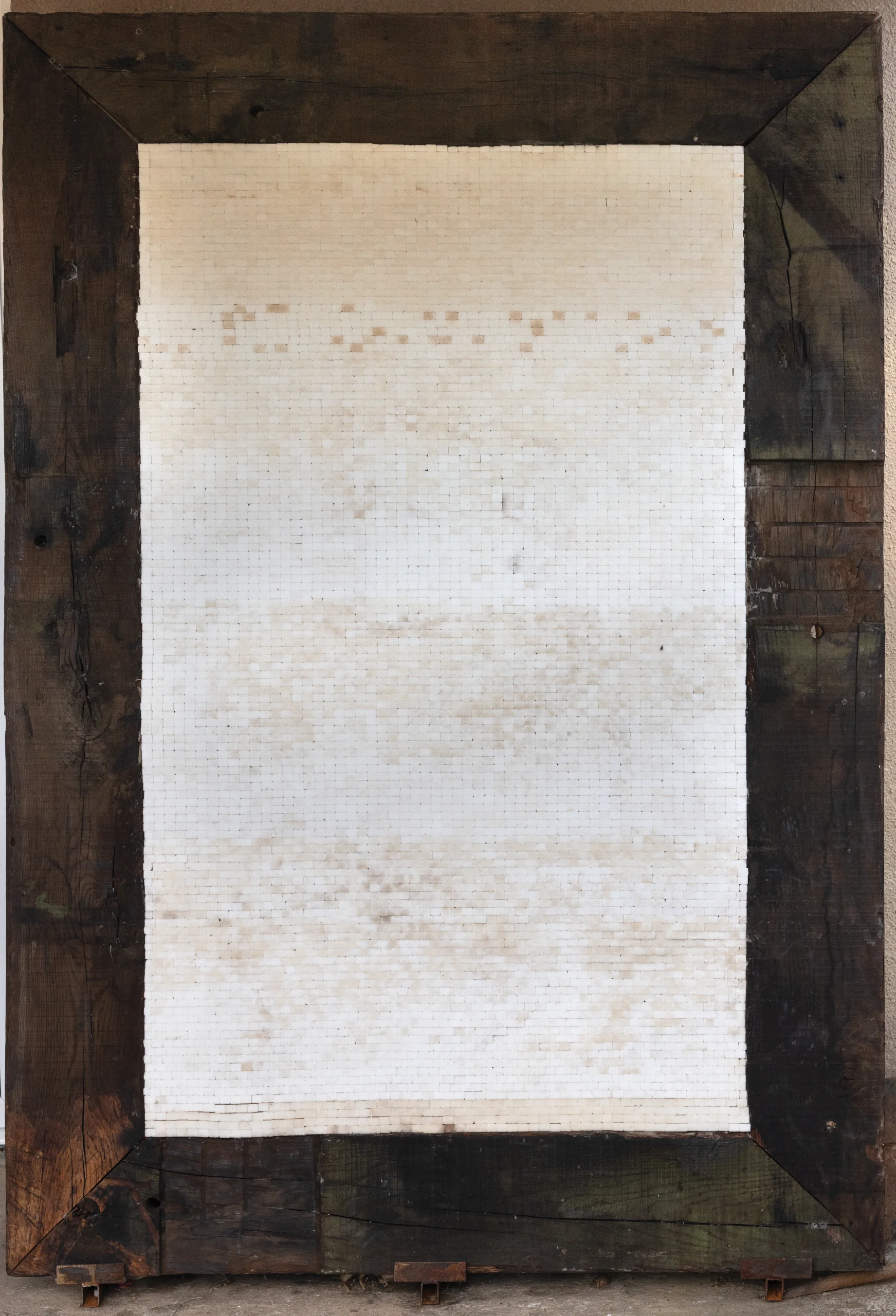
In the context of Radovanović’s works employing sugar cubes, this theory becomes strikingly evident. As a material subject to melting, decomposition, and environmental influence, sugar actively reveals processes of disappearance and transformation, becoming a bearer of meaning in its own right. Through the use of this material, Radovanović does not create a static form, but an event – a process in which the material testifies to its own metamorphosis, pointing to uncertainty, ephemerality, and constant change in the world that surrounds us. Her piece Sugar Obelisk – Orevuar Montenegro took the form of a steel frame obelisk filled with sugar cubes, and placed in open space. Exposed to weather conditions, insects, and other factors, the sugar underwent transformation through melting and quiet dissolution. This process was not only a physical phenomenon, but an artistic event, documented through a video work that records the change, underlining the performative dimension of this particular material and the very transience of the artwork.
Such interaction between the material and external influences generates the event itself – the process of disappearance and metamorphosis. In this context, sculpture ceases to be a static, enclosed form, and becomes a space of event, performance, and interaction with its environment. Radovanović’s work rests on the discourse of the expanded field of sculpture, but deepens it through a focus on the ephemeral nature of the material and the dependence of process on external factors. Sugar cubes, subject to melting, decay, and the workings of living organisms, are not passive; they actively participate in the narrative of the work.
This approach resonates with Jane Bennett’s theory of “vital matter,” according to which material has its own agency and actively participates in shaping events. The dissolution and transformation of sugar reflects not only physical processes, but positions material as a link between space, time, and the viewer, contributing to a multi-layered narrative that reflects both physical and symbolic transformation. Radovanović thereby connects visual experience with conceptual reflection on impermanence, mutability, and the precariousness of the world. This approach – where sculpture is defined through time and process rather than permanent form – invites the viewer to become a witness, a participant even, in the unfolding of the artwork. The dissolution of material becomes a metaphor for the ephemerality, uncertainty, and unpredictability of postmodern existence, while also raising questions about the role of material, space, and environment in defining artistic experience.
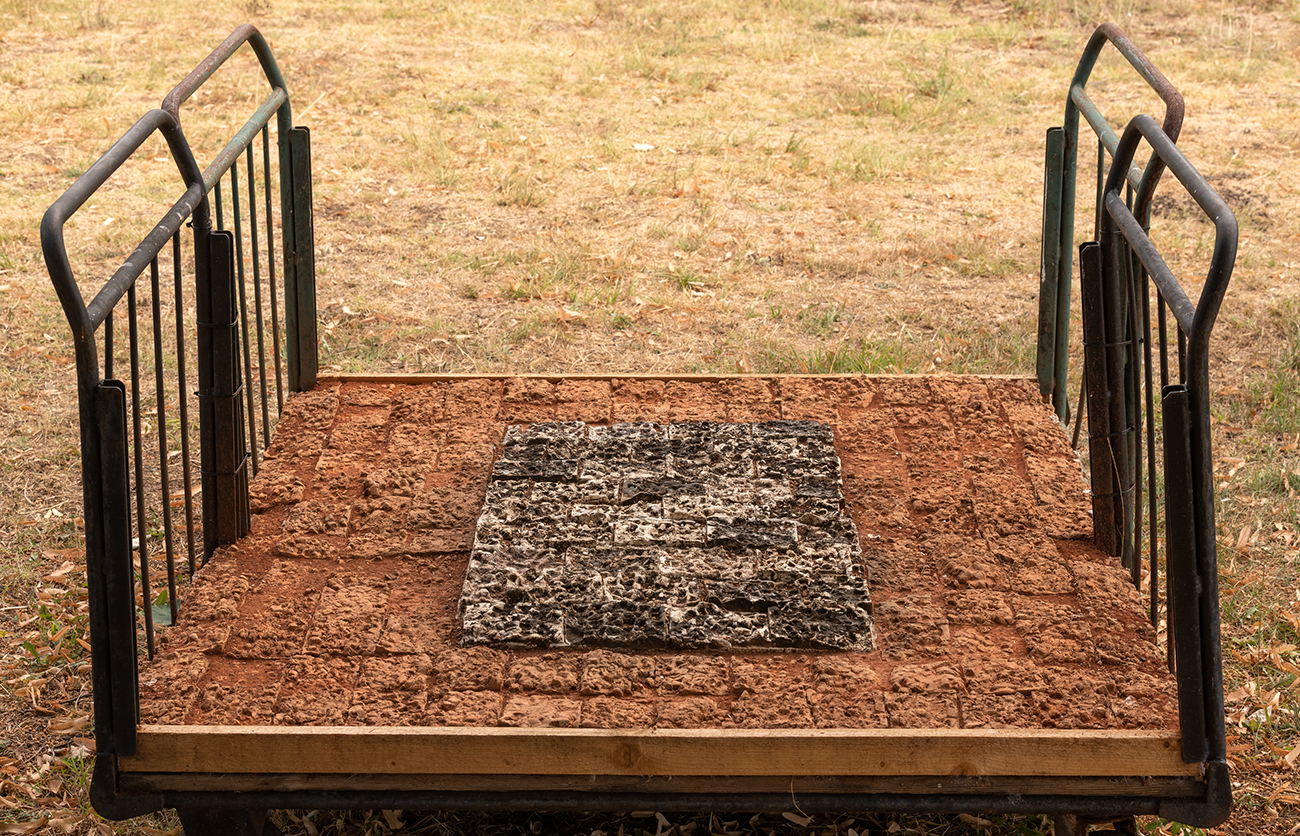
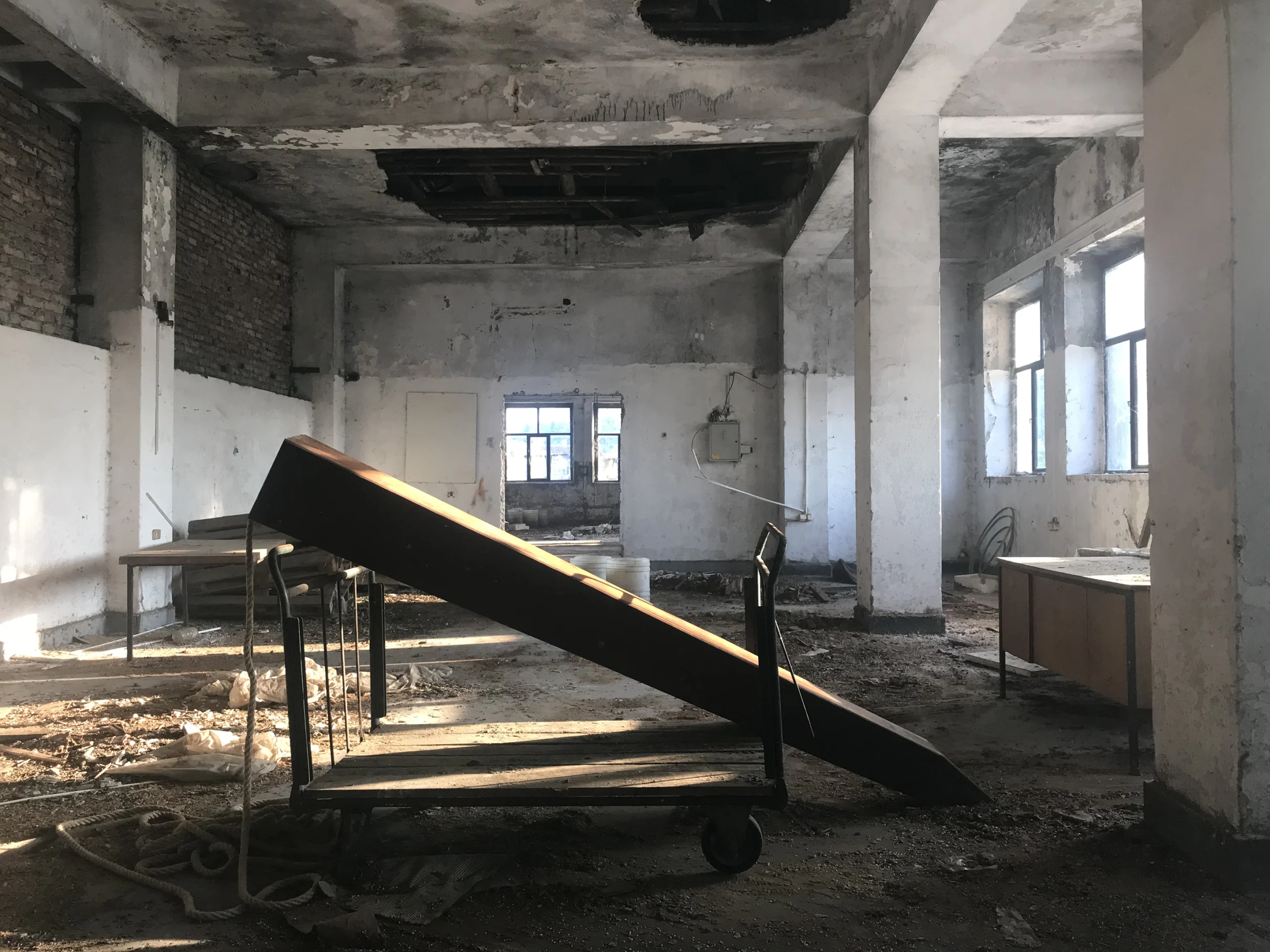
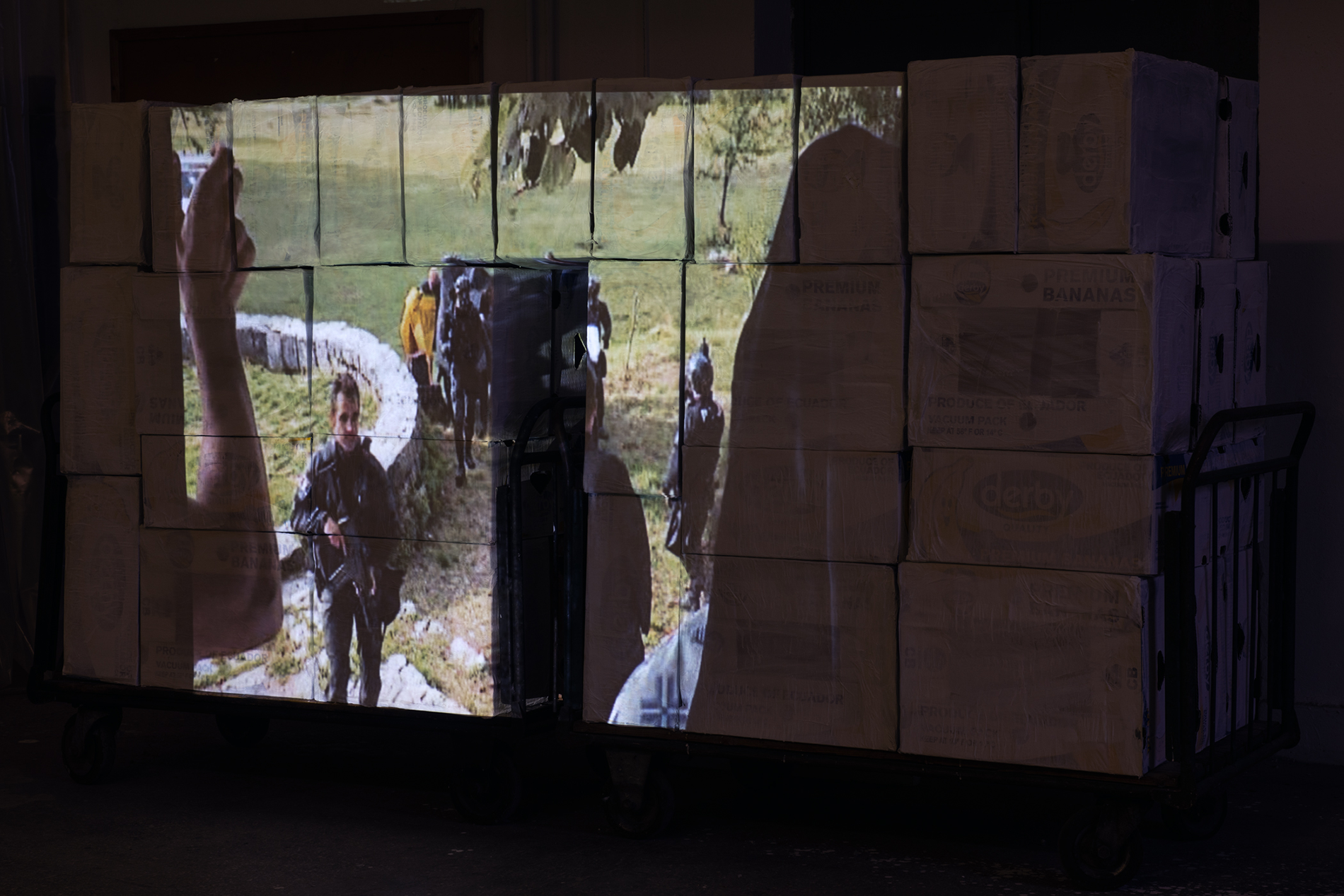
Building on the poetics introduced by the Sugar Obelisk, Radovanović develops, in other works, a similar context where material is never neutral but actively shapes a narrative. If sugar in the obelisk testified to its melting and dissolution under natural forces, in these works it appears in hybrid conjunctions with soil and terracotta, constructing a new register of meaning. Replacing the monumentality of the obelisk, these objects evoke labour, weight, and industrial utility, yet they too carry the potential for decay and transformation. Thus, Radovanović once again affirms the performativity of material in Bennett’s sense: soil, sugar, terracotta, and plaster are not mere means of shaping, but agents whose properties and processes structure the narrative of the work. The trolley, although a functional object of transport, is arrested in a moment – no longer serving labour, but becoming a site of holding, archiving, and witnessing transience.
This artwork could also serve as a counterpoint to Sugar Obelisk: whereas the obelisk aspired to the elevated and monumental, the trolley grounds us, shifting our focus onto labour, weight, and the materiality of the everyday. However, in both pieces Radovanović constructs sculpture as process and event – a space where materials, time, and space enter into dialogue, jointly shaping the artistic experience.
In this sense, her works show that the concept of the “expanded field” remains a vital category for understanding sculpture today. Her practice reminds us that sculpture can no longer be grasped as a medium defined by closed form or material, but as a differential practice – a play of opposites, always “negative,” always at the threshold. If modernism sought clear boundaries of form, Radovanović points to their dissolution: to sculpture as a space of encounter between natural and artificial, stable and fragile, visible and invisible.
That space begets the truth of her work – a truth not given in form, but in process and transformation. Radovanović’s sculpture does not conclude with(in) the object, but continually opens to time, space, and the viewer, becoming an event, testimony, and experience. Her works thus affirm that contemporary sculpture is neither closed form nor mere matter, but an open field of relations where materials, processes, and contexts jointly construct the space of artistic truth.
Milica Bezmarević
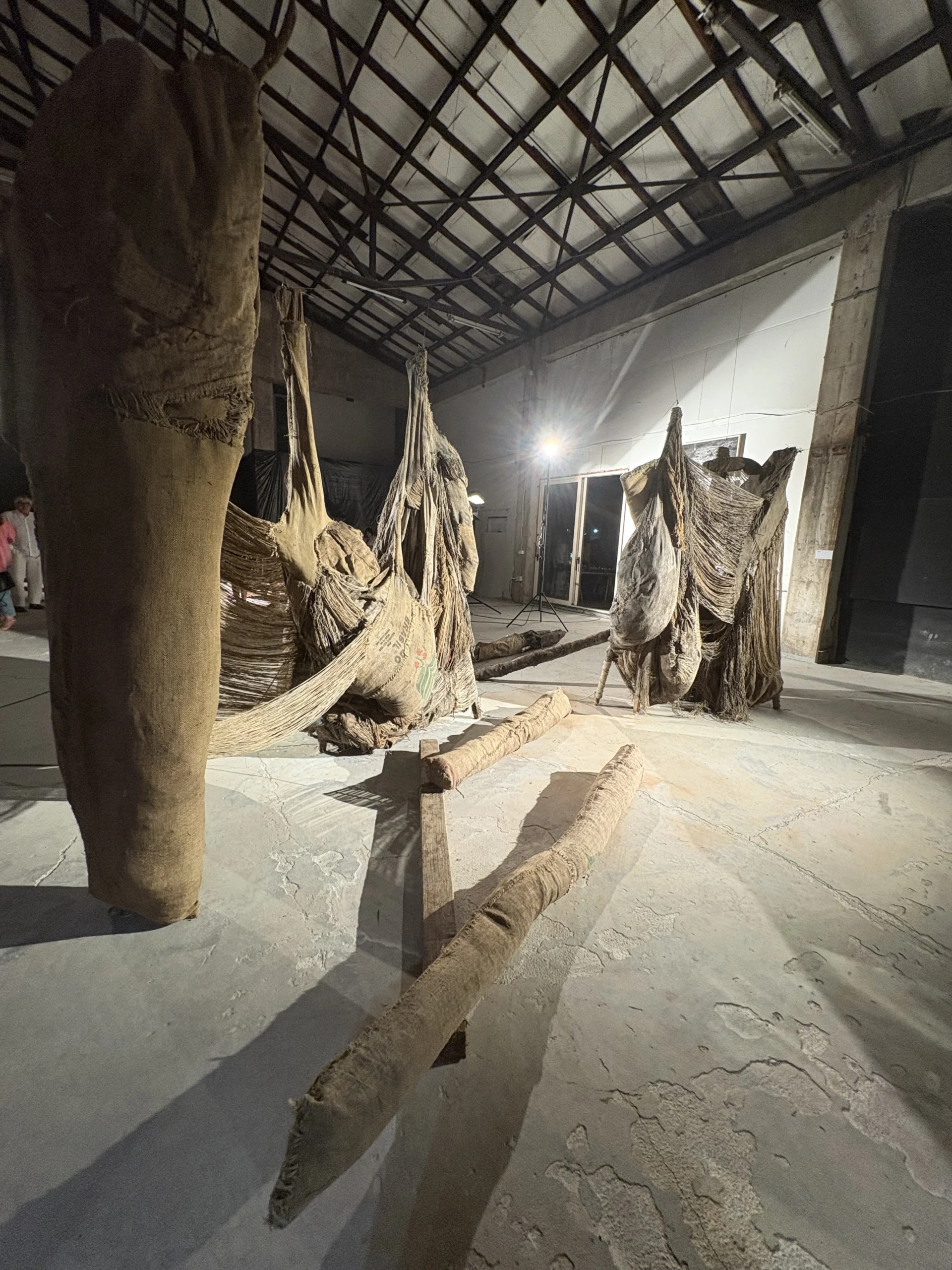
photo gallery