OH, FUTURE TIME, ARE YOU ESTRANGED FROM ME
Ivana Radovanović – Revolt as a creative force
Ivana Radovanović's artistic research converges with the context of the 21st century, and best represents our current era and its turbulent atmosphere.
The title of the exhibition “Oh, future time, are you estranged from me” is an extract from the poem Au Revoir Montenegro, by Ratko Vujošević. The relationship that the artist identified between her artistic concept and the verses of the renowned Montenegrin poet is by no means accidental and unintended; rather, it represents the very essence of understanding the context of time, identity codes, stereotypical matrices and their slow and painstaking apprehension and deconstruction.
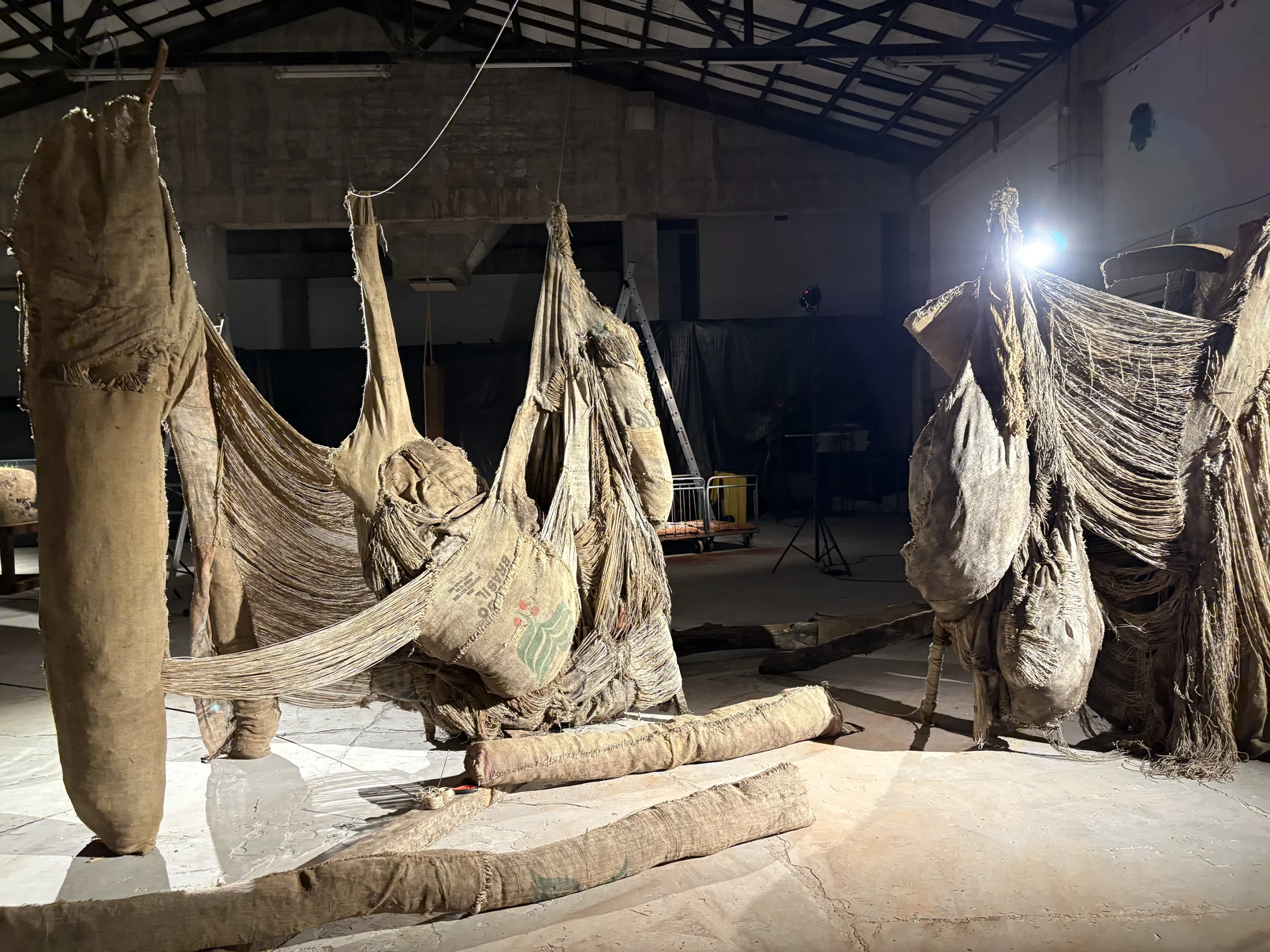
She is a sculptor by training, but delves into the expanded field of art, whereby she expresses herself through various media formats and their intersections. She works with sculpture, objects, installations, ambient setings, video, performance, artistic action, and in situ projects. Radovanović often combines solid and perishable materials, ranging from metal, straw, jute and terracota to sugar cubes, wood, bronze, earth, glass...
As the representative of Montenegro at the Venice Biennale in 2017, she demonstrated the strength of her talent and ability to conceive monumental projects in an open public space.
Through her work, Ivana deals with issues that explore socio-political, sociological and ethical spheres, existential and identity issues, and issues pertaining to art per se. Her artwork conveys a permanent dialogue between conflicting feelings, opinions, stereotypes, and decisions such as issues of life and death, creation and disappearance, love and hate, light and darkness, joy and sadness, man and nature, freedom and prison.
For the artist, the process of creation is as important as the process of decomposition. Many of her sculptures and objects are deliberately left to the influence of time and natural processes. The artist films these transformations on camera, so we can witness them on video. She often resorts to more drastic measures such as burning and breaking of objects, and transforming the original forms into something completely different. The fragments and information contained within them serve as evidence of the previous existence of sculptural forms and testify to their life and destruction.
The process of (self)destruction to which the artist subjects her work has a symbolic aura that can be interpreted in several ways: as the artist's revolt against the state of society on a local and global level, against poor political decision-making and the provoking of crises for the sake of personal or isolated group interest, against the position of man within turbulent social relations in which capital and the unquenchable thirst for growth govern people’s lives. It is also a response to the disturbed value system in which the existence of man and his life, and even the planet itself, lose the batle in relation to the powerful laboratories of production and placement of money, wars, crises... This artistic destructive action can signify both one's own rebellion, and disappointment in the position of art in society and its power to detect and illustrate current social problems, its critical edge and the engagement of its messages, all with the aim of making strides towards necessary changes.
The artist believes that art should be autonomous, free from the influence and dictates of daily political needs and various social interests. It is the driving force that can illuminate the path we take and guide us through the intricate and intersecting field of temptations and ambiguities. While we live immersed in personal and collective utopias, we forget that art is out there, that it is omnipresent. It is not just a refuge, but a driving force, our sincere partner in exposing manipulations and lies.
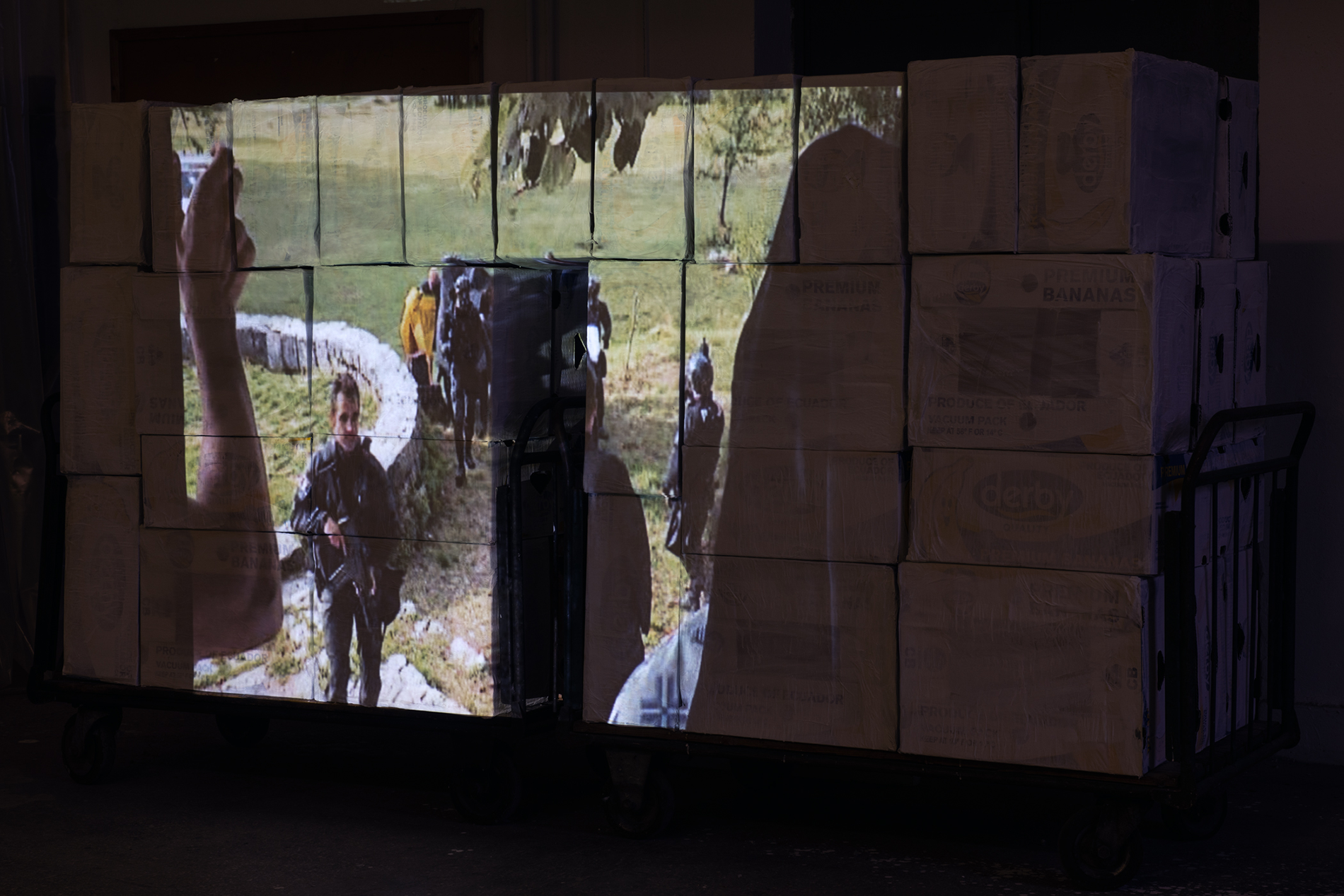
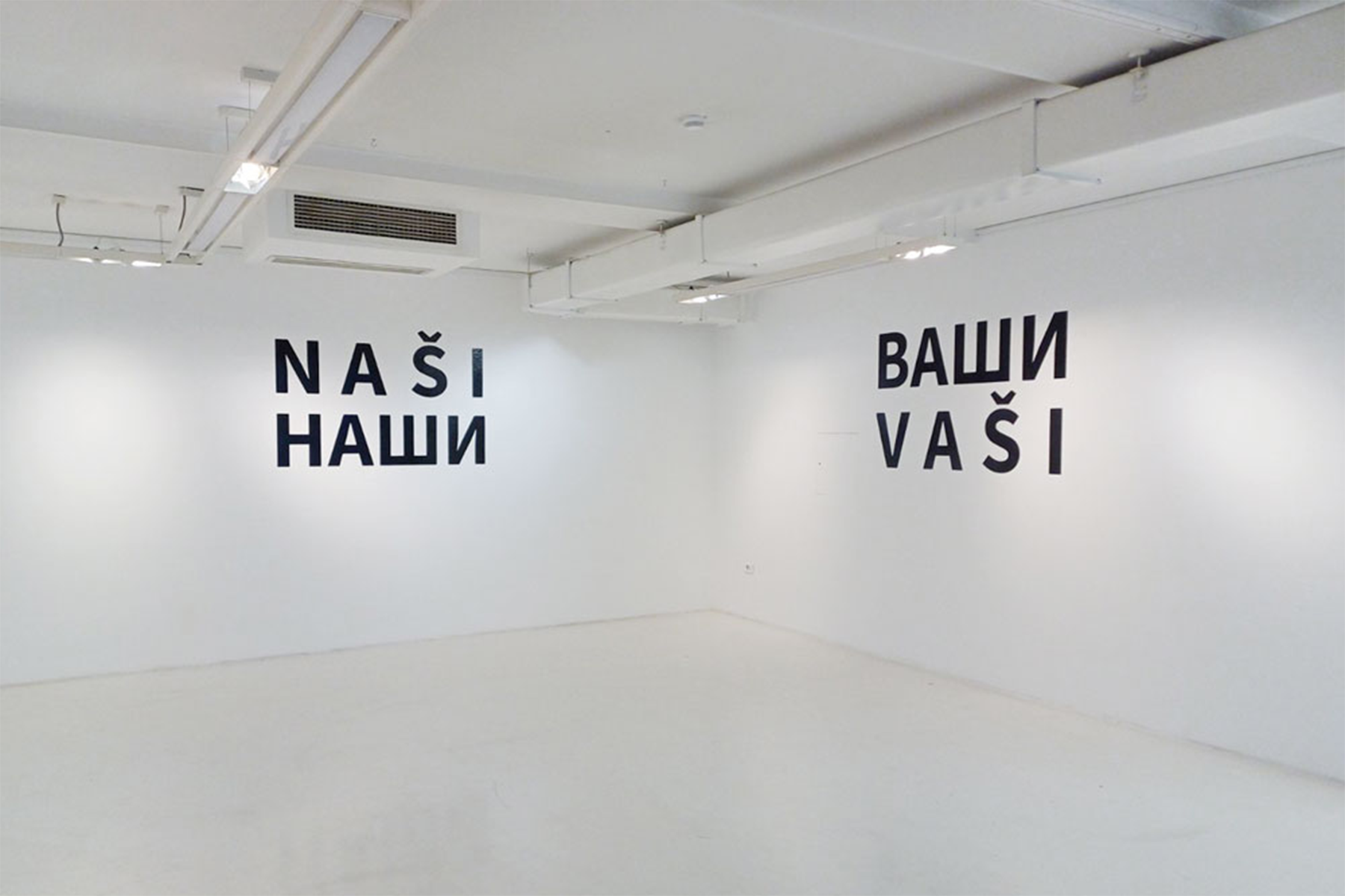
At the Small Fine Art Salon (MLS) in Novi Sad, Ivana Radovanović presented a complex project consisting of several segments, including spatial installations, a floor object, video work and photographs that best provide insight into the phased development of her artistic process, ranging from the initial idea, over the fully defined concept, the actual work process, to final realisation. The exhibited obelisk takes on a central role, as a monolithic object with four sides that narrows towards the top, known in (art) history as a symbol of the Sun and the connection between this life and the other, a symbol of victory and power.
The object entitled Molitvenik or Prayer for Lost Objects personifies an upright prayer book that connects heaven and earth. The object is diagonally tilted, whereby the top is directed towards the ground, which hints at the enslavement of the Sun and its subjugation to the Earth, which must be prevented. The video Sugar Obelisk – Au Revoir Montenegro is a process artwork in which the sculptural form reacts to its environment by merging with it, and building interdependent relationships. It transforms itself under the influence of weather and spatial conditions. And as the
artist states, it is a symbol of the general planetary and geopolitical fate that shapes life on the periphery of Europe. The floor object is made of metal and sugar, and is directly linked to the work
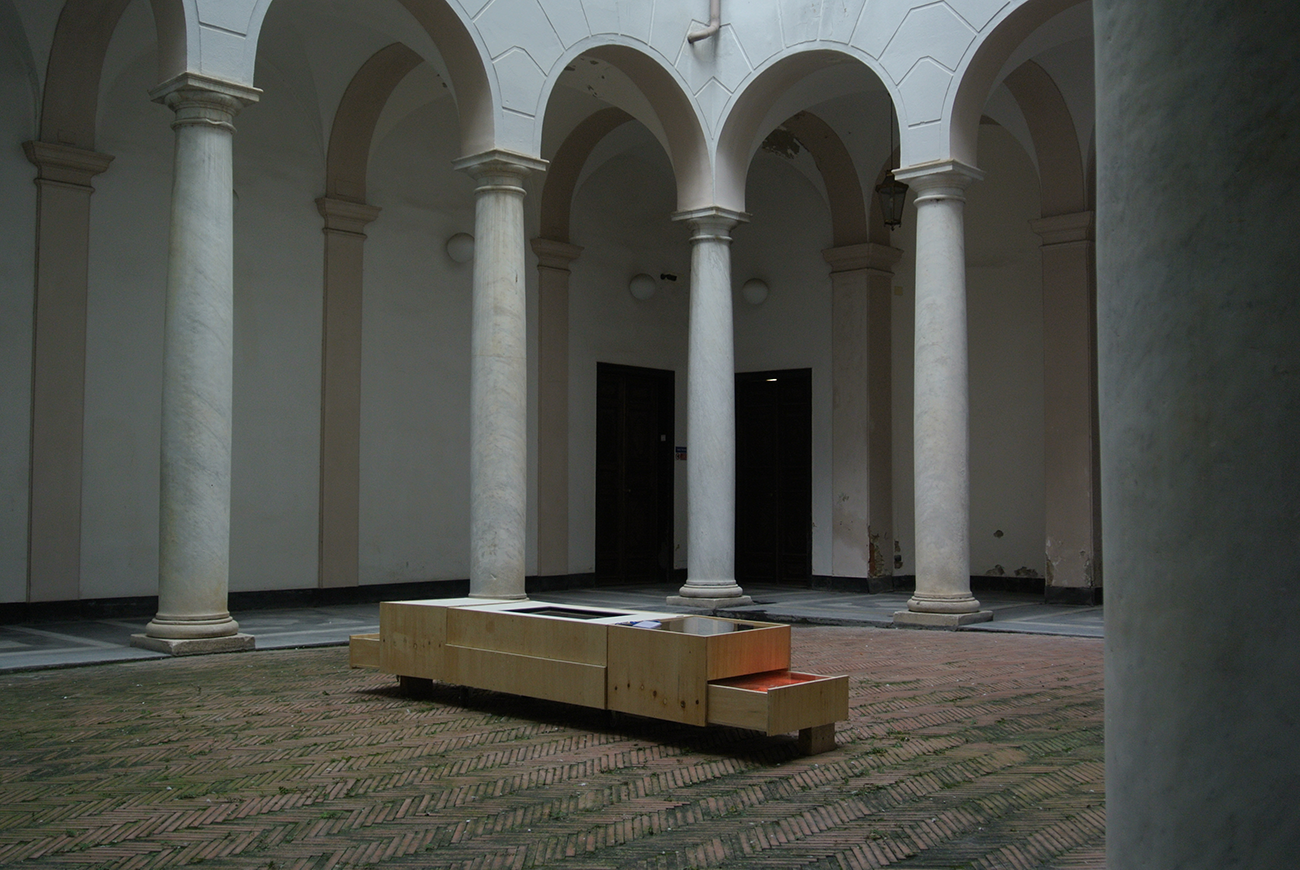
Sugar Obelisk – Au Revoir Montenegro: it is, in fact, a bronze mold of a part of the obelisk's surface, placed in a metal frame. The space between the relief and the metal frame is filled with sugar cubes. This floor object forms a fragment of a larger spatial form, but is simultaneously an autonomous plastic concept to which all other segments of the exhibition are related. Its name is identical to the name of the exhibition: “Oh, future time, are you estranged from me”.
The artist's plastic concept contains a symbiotic link between the romantic, expressive, mystical, futuristic, philosophical and modernist discourse. Processuality and (self)destruction are the procedures upon which she relies, and which support her in enabling greater visibility of the original idea.
In her artistic practice, Ivana Radovanović often relies on free public and alternative spaces than on assigned gallery and museum spaces because they allow her to work more intensively in situ, adopt a contextual artistic procedure, and explore the scope of site-specific installations.
Svetlana Mladenov
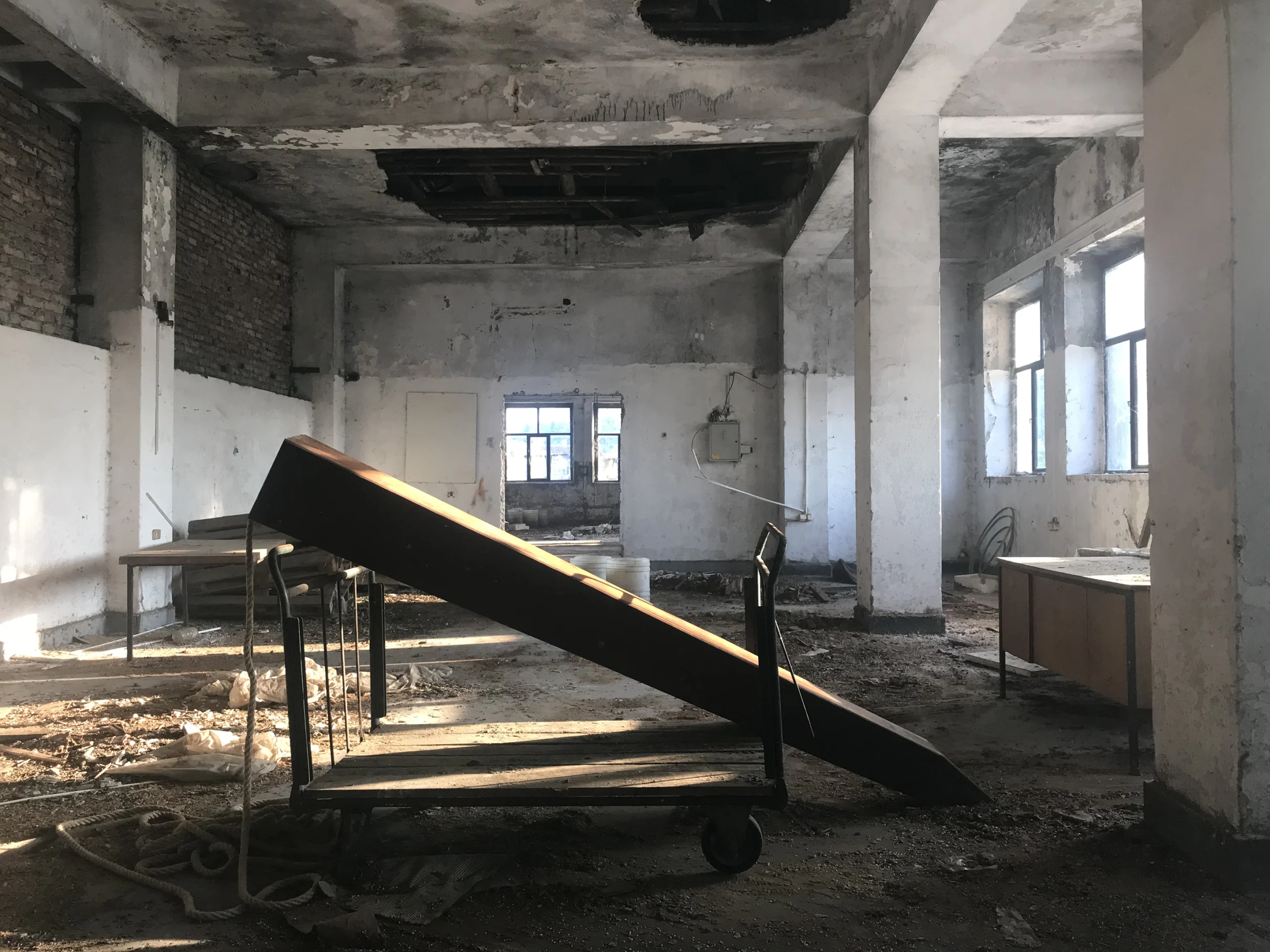
photo gallery