PERENNIAL PLOT
Ivana Radovanović and Magdlena Pavlović: sculptural achievements in the panopticon of the Risto Stijović Gallery, Podgorica, 2021.
In representations of the world, sculpture has always been the stopping point of the driving force of civilizational movement. The fact that it is immobile, that the place and occasion are nominated, all comprise the dignity of the sculptural legacy, from totems and relics, to numerous, if not, at times, paradoxical memorials. At the end of the 20th century, the pressure of global information changed the effect and purpose of sculpture, demonstrating fluid consequences, and often leading to experiential indifference. Regardless of the period in which they were made, publicly presented works have become seemingly invisible in an accelerated society with its associated distractions. Creative devotion seems to have withdrawn within its own boundaries.
Notwithstanding, artistic expressiveness is still able to reflect the violent force of present-day experience, conveying the older, ancient order with its mastery. Certain contemporary sculptural processes and reflections, and the feeling for workmanship merge as a bold category that resists the frighteningly banal, advertising-killing urges of altered ideological frameworks. The swaying fabric of our period has produced numerous strata of post-information abundance. The layerdness of sculpture, its inhabitation of space, and its temporal stratum of permanence become a linguistic formation within the narrow framework of its dimensions. Today's geopolitical reality, the deteriorated strongholds of postmodernism, have been marked by a prevailing anxiety and mass vulnerability for more than four decades of systemic recipes for global transformation. [1]
Within the real polygons of social / moral slippage, as well as increasingly visible natural disasters, despite the reaches of technology, economy and the notion of freedom, sculpture becomes an exceptional dedication both in the ambience of nature and that of historical memory. Dystopian projections in descriptions and predictions have been immersed in the creative subconscious and perceptive aptitude for decades, both in visual arts and literature. They permeate all that which, after all, occurs regardless of our will - in balancing the inherited ideological and global security considerations, as well as experiences within the environment, the never-overcome social divisions and the growth of human loneliness. The energetic inlow of the approach that that marks two different sculptural poetics is a museological contribution to the preserved units of the decades-long developmental stages of Risto Stijović's art. Ivana Radovanović and Magdalena Pavlović, with their sculptural and spatial interventions, point to the core of the disjointed structure of present day. The collected emotional compactness of the Gallery exhibition emphasizes the peculiarities of a superb manner of working with the legacy - Stijović's representations of the individual, as well as tradition and liberation. With an optically and tactilely challenging approach, the scale of expressionism of the two artists is renewed and dissolves within the borderline anthropological circumstances of the third decade of the 21st century. Reflective performances rise like scenes from a dream or revelation. They indirectly follow the developmental stages of Stijović's sculpture, the surfaces and structures of personifications, mythical and biomorphic states where statues, reliefs, woodcuts, personalities, animal figures, as well as wood polishing and carving of masterful marble surfaces reach the modality of vigilance and warning. [2]
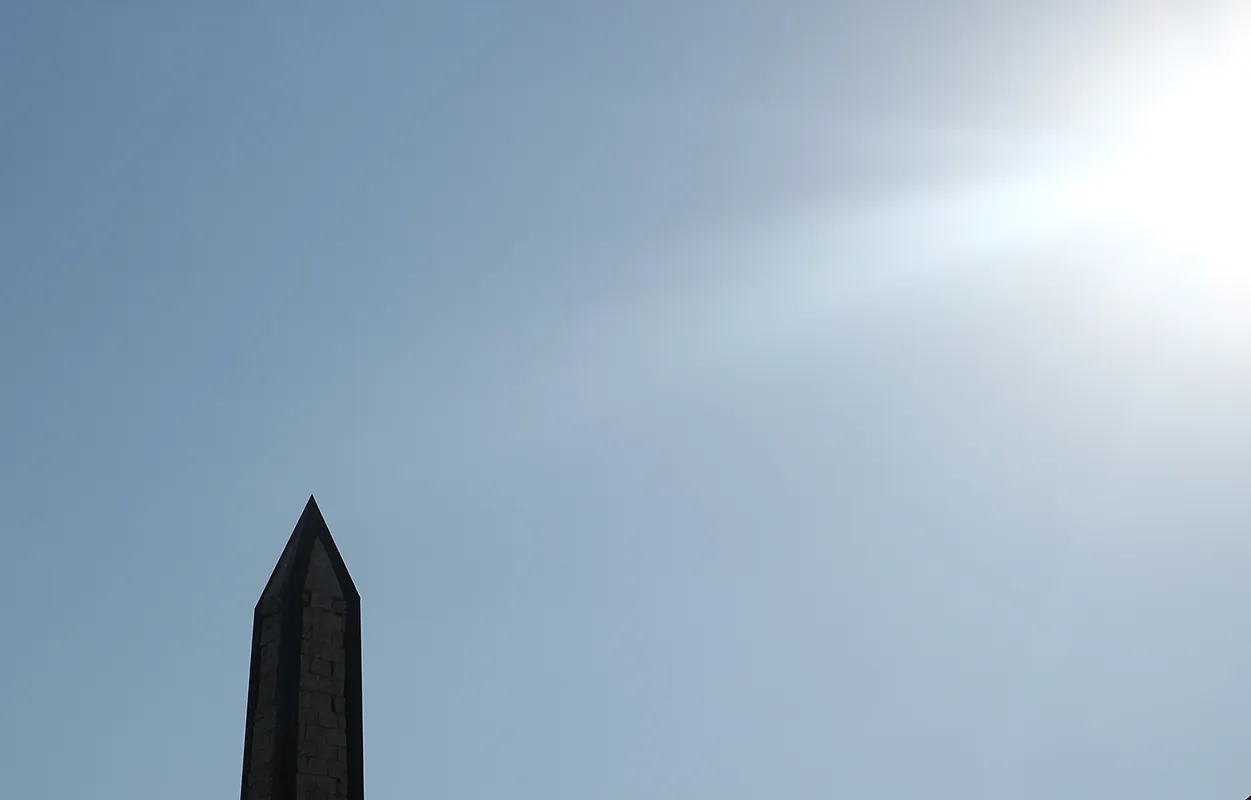
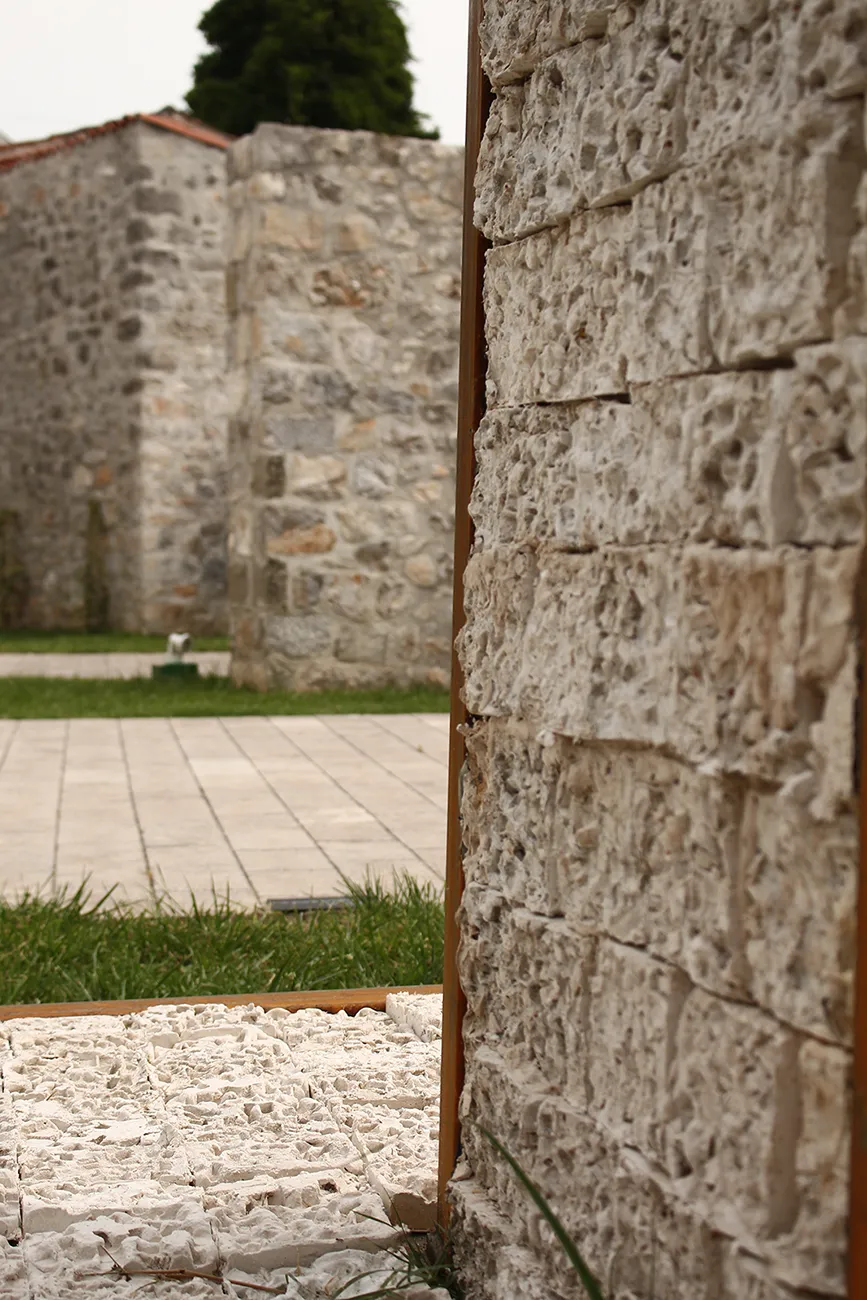
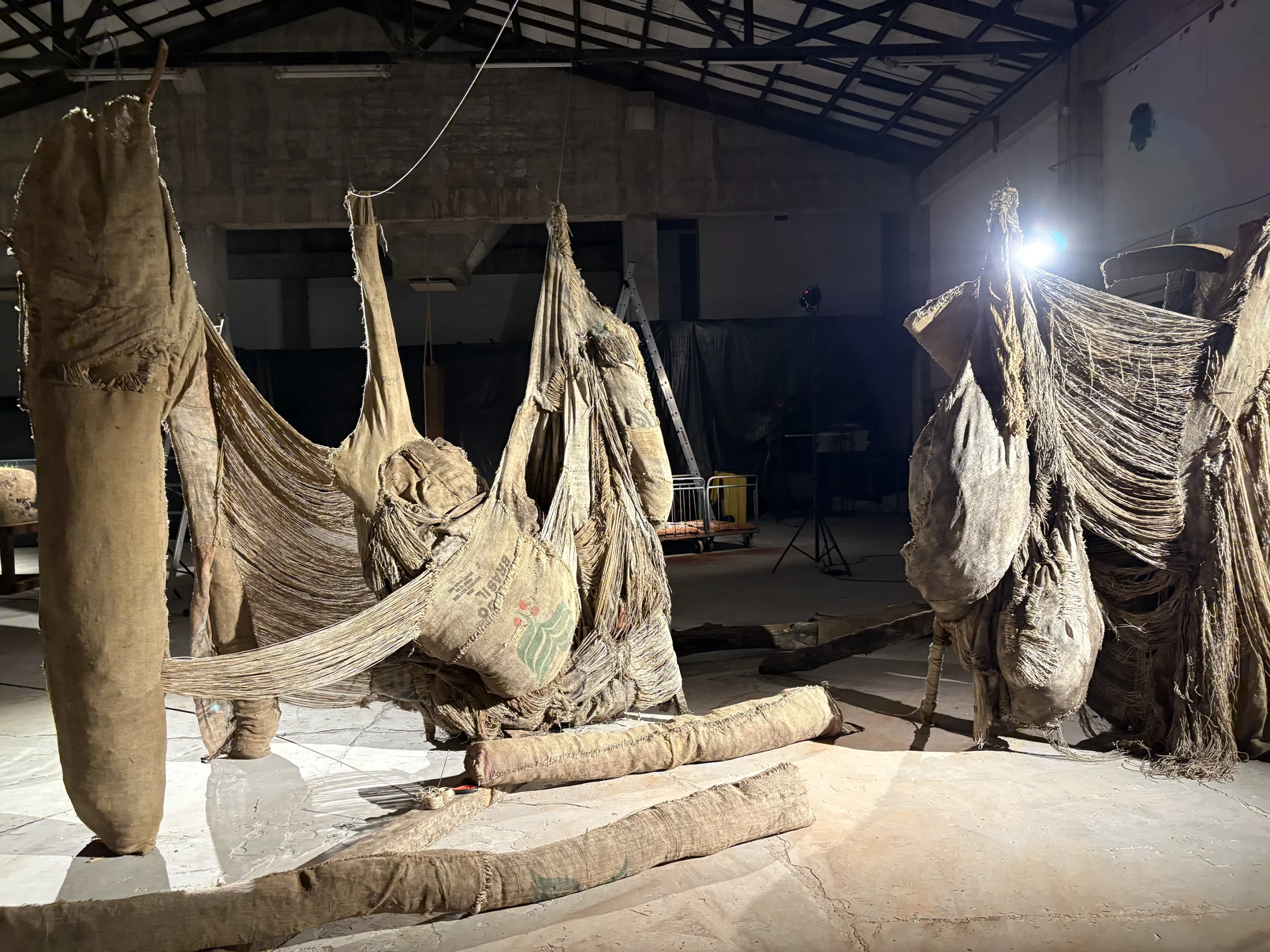
Enclosed in the Gallery facility as a place of contradictory encounters of primordial artistic and sculptural designs, a visual force awakens that dissolves its own borders. As a premiere of sorts, Ivana Radovanović presents a structure similar to marble that is, in fact, a sugar obelisk, which stands over eight meters tall. It is a lesson on the contradictions of our personal and civilizational victories. The obelisk summarises the past and those times that architecturally become an active declension of the status of ecstasy and ancient divine root causes. The monumental extension and height of the obelisk, together with the architecture of the Gallery - home of an homage to the great creator, indirectly point to Land Art – earth art - from the late sixties, and its founder Robert Smithson. Owens lists this first bearer of the allegorical movement among the key protagonists of the reflective art of all media. The ambience of the exhibition in proximity to the building is justified not only by the sculptural works of the two artists, but equally by the earthly origin of the sculpting material. The materiality of the works is in unison with the process of change: vegetative and geological modalities, stringed sugar blocks, welded iron and brass reveal the transformations of reality, but also a meaningful imaginary transfer. The allegorical panopticon also includes a game with a mythologisation of the climate and visibility, as well as customs and qualities of living in the range of sensitivity of refined sculptural interventions. For Ivana Radovanović, the works created for exteriors and exhibitions, such as the pillars made of wicker baskets and the various protocols of replication, or surprises, such as natural materials in the forest, convey the paradox of the physical weight of sculpture. Her giant hanging mass of sewn piles and soil, inspired by T. S. Eliot’s poem “The Hollow Men” spur the semantic process of cathartic charge. In that vein, the “Sugar Obelisk - Au Revoir Montenegro” is a bold representation of the general global and geopolitical fate. The glory of the solar energy of nature as a monument of earthly glory is a genetic composition of consciousness and power. An expression projected in the anthropological modality of the observed nature and increasingly fatal changing circumstances of survival on Earth. Through porosity and the dissolving sugar, the sculptural-architectural monument carries a primordially shocking image. In personifying the upright prayer post, she includes, in the title, the famous poem “Au revoir Montenegro” by Ratko Vujošević from Podgorica. The poem is an experiential cantilena of shocking descriptions of the ambience, resignation and confrontation, emphasised by the verse: “Oh my future, do you belong to someone else?” [3]
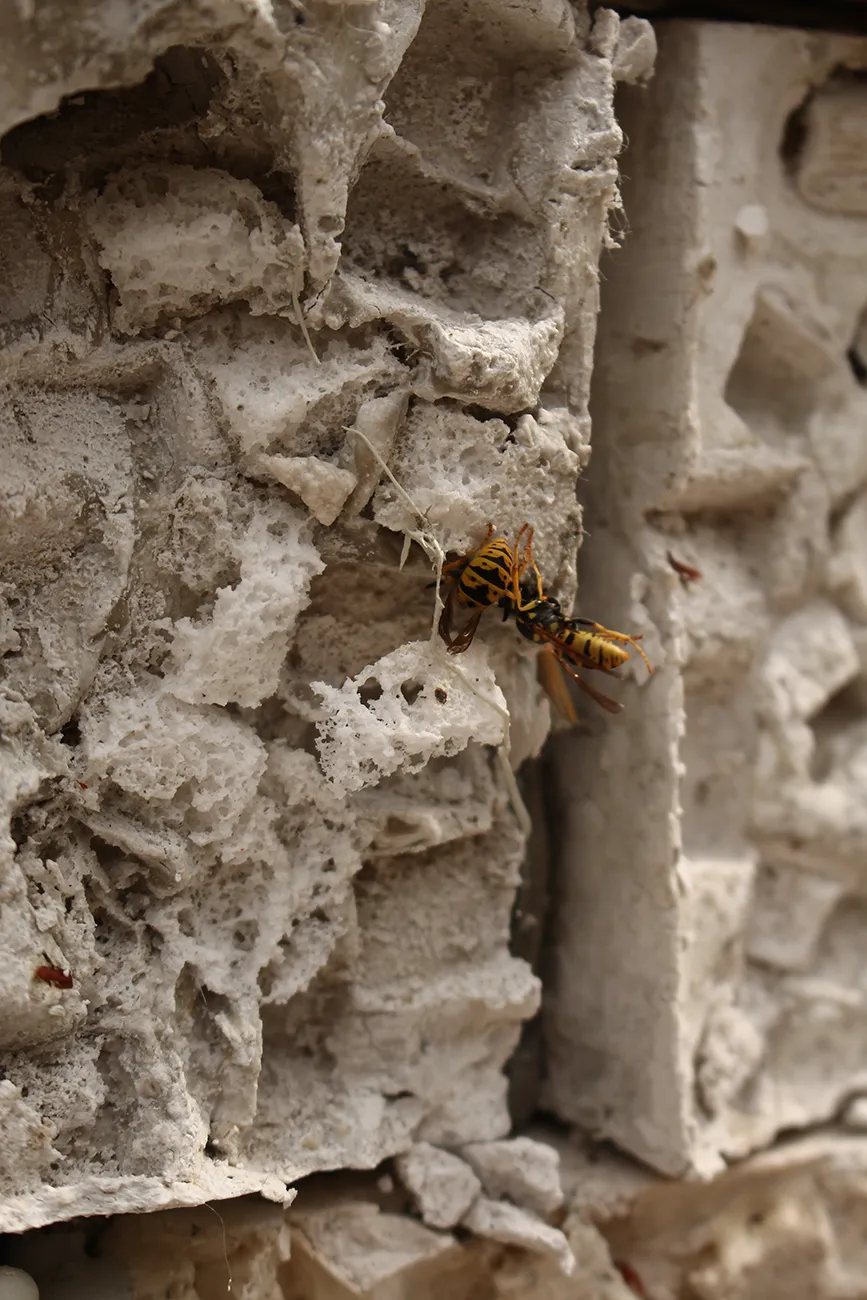
All types of collected traces are subject to the density of matter and the passage of time in subjective duration, which is a feature of the construction of sculptural units by Ivana Radovanović. The sugar obelisk is a contribution to the experiment on the permanence of millennial insertion into the hierarchies of sacral monuments: from the Egyptian fundamentals to power transfers in triumphal punctures. It points to the globally most representative depiction, the finest example, from Washington, which features an obelisk as a memorial to the democratic independence of the youngest nation and the new global era, starting in 1776. The indirect link of the semantic process of sculpture with history is invoked by Barnett Newman’s overthrowing piece “The Broken Obelisk” (1967). The minimalist hazard statics of form made of steel is an optical paradox. The top of the obelisk is turned upside down, to the foundation of the pyramid,[4] and serves as a predecessor and a surprising ally to the ambiguity of the structure placed in the Gallery yard. The piece thereby serves as evidence to the merging of architectural structures and sculptural monuments in the active era of instability. [5]
The historicity of the resulting 'Sugar Obelisk' is an allegory for the narrative of a series of doubts, fractures, divisions, as well as symbolic crackles and worn-out bursts of matter. The glory in the sweetened and gradual disappearance constitutes the motif of Vanitas, and thus the canonical connection of unacceptance with expansive transience and damage. The trembling stoicism is also at the core of certain sections of Stijović's figuration. The expected marble whiteness of the millennial form of the obelisk evokes a connection between the earth and unfathomable heights, which is why Newman’s works or even his predecessors’ – such as the “Infinite Pillar” by Brancusi –are referred to as meaningful stations of novel perception. With such a structure, the ambience with the Gallery building takes on a monumental hypnotic sense of personal discovery.
Reaching out to the past of their artistic media and overall culture, the two artists are captivated by the retreat from predatory and parasitic violent everyday life. Through multiple emanations of imagining and forming, they discover ancient and hidden areas of discernment.
Nikola Šuica
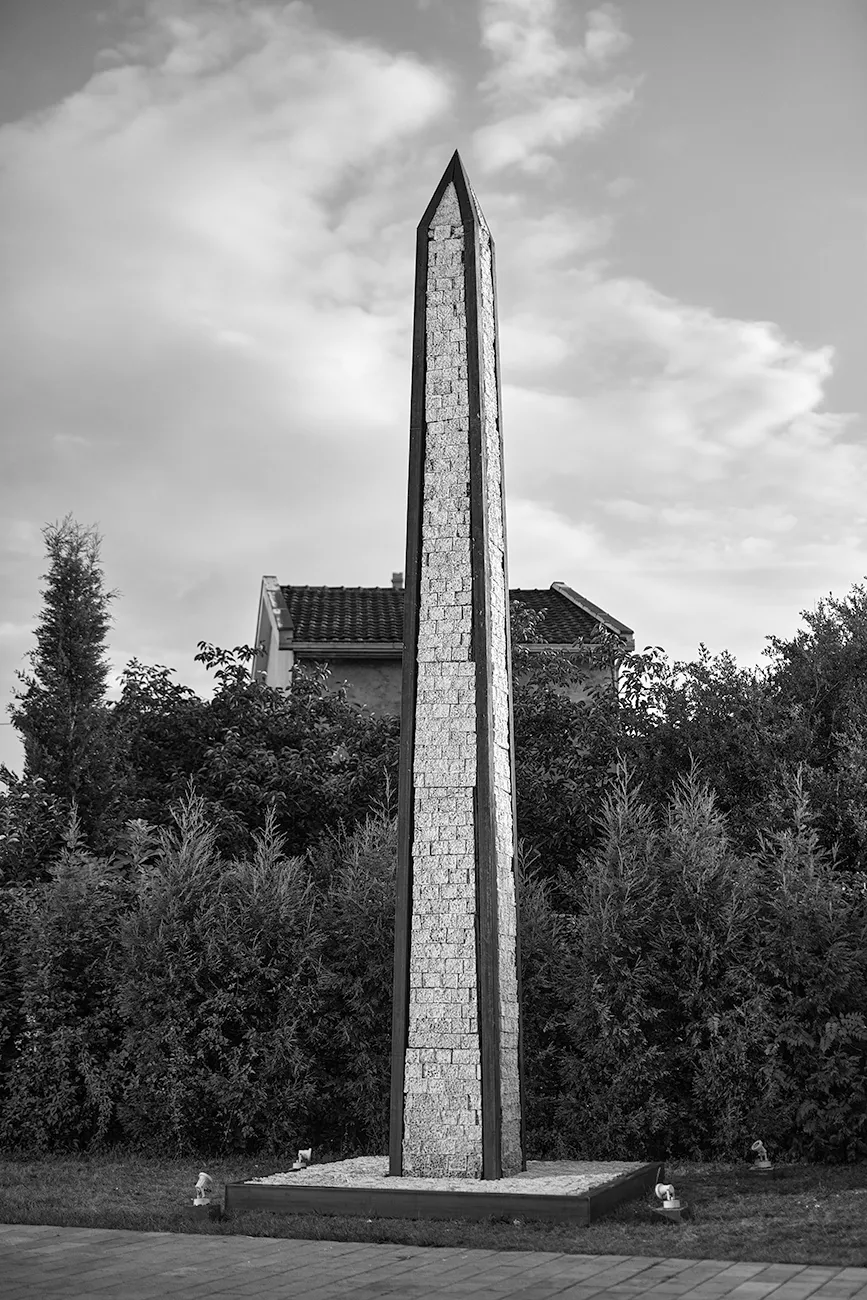
photo gallery