The Quiet Affinity for Fleetness
What shall I do with this body they gave me,
So much my own, so intimate with me?
For being alive, for the joy of calm breath,
Tell me, who should I bless?
Osip Mandelshtam
When we talk about fleetness, or becoming aware about inconstant nature of the things, we can operate inside Japanese concept mono no aware. The term itself can’t be simply translated to our language, we have to describe it through the state of sadness, melancholy, subtle sen sibility and empathy for the changeable nature of existence. In other words, that term doesn’t imply suffering, but ability to accept. To be in harmony with this kind of contemplation means owning a pure heart that sympathizes with the vital energy of things, in the world that is con stantly changing. The artist, Ivana Radovanović, respects this natural flow and has the need to be in harmony with it.
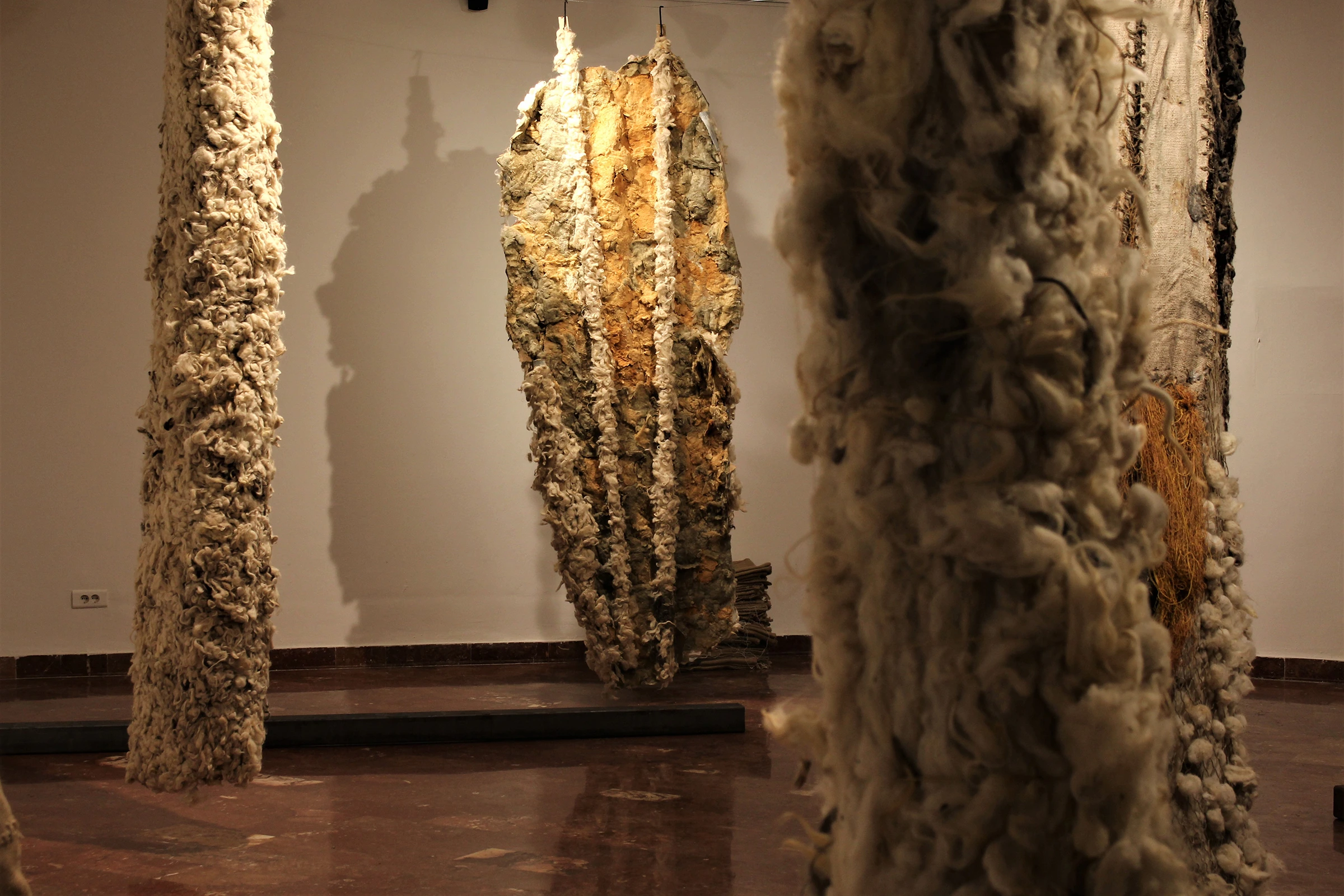
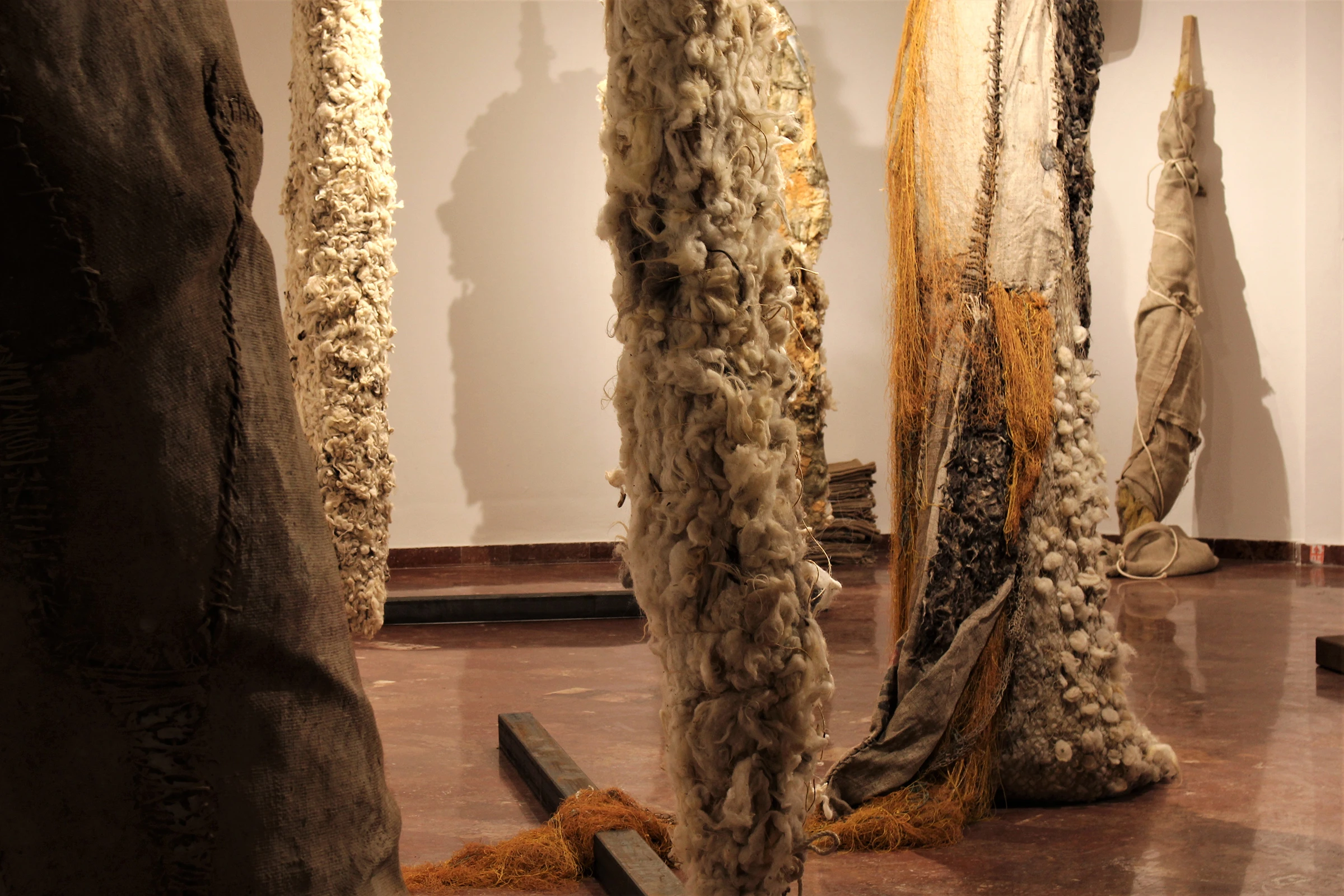
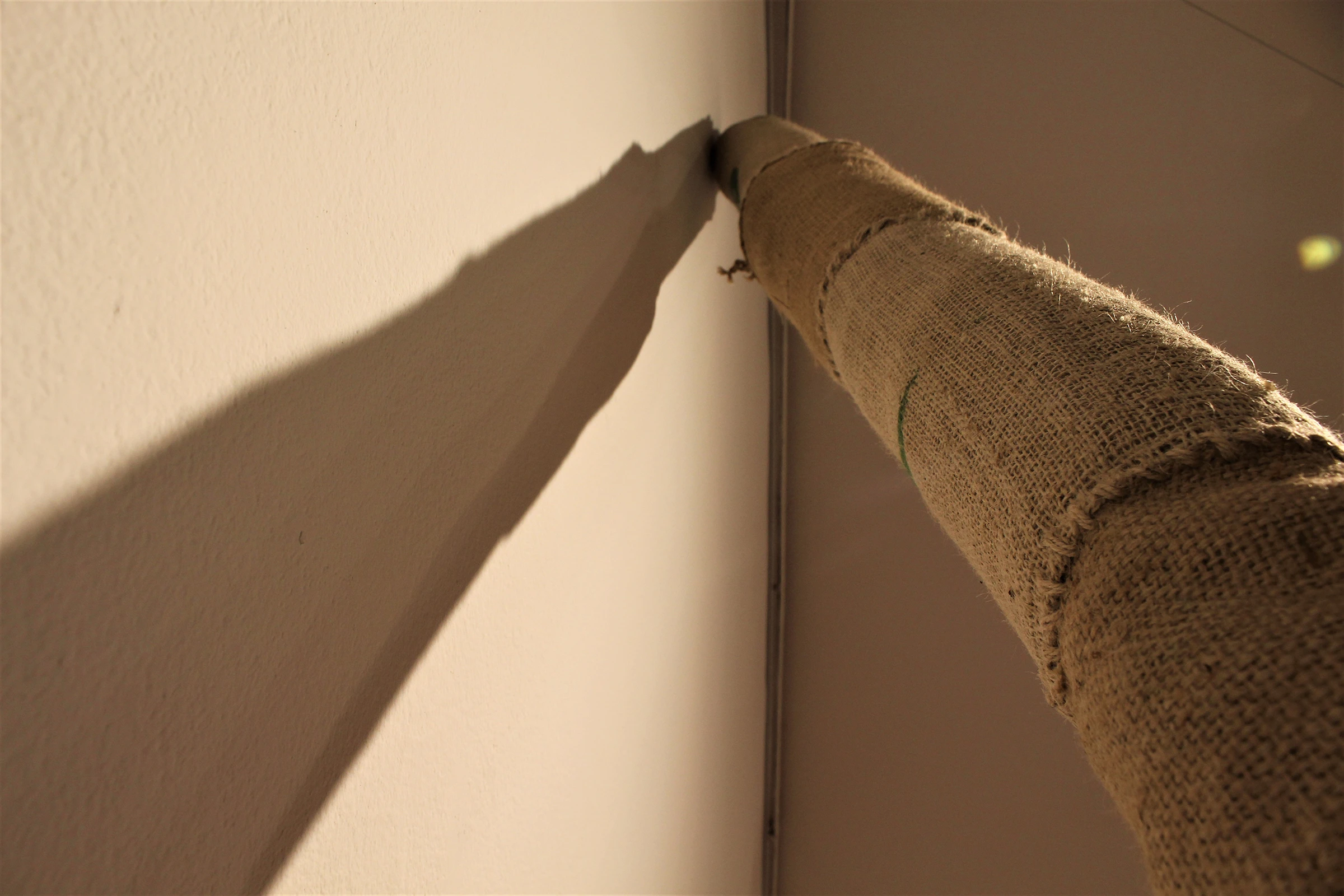
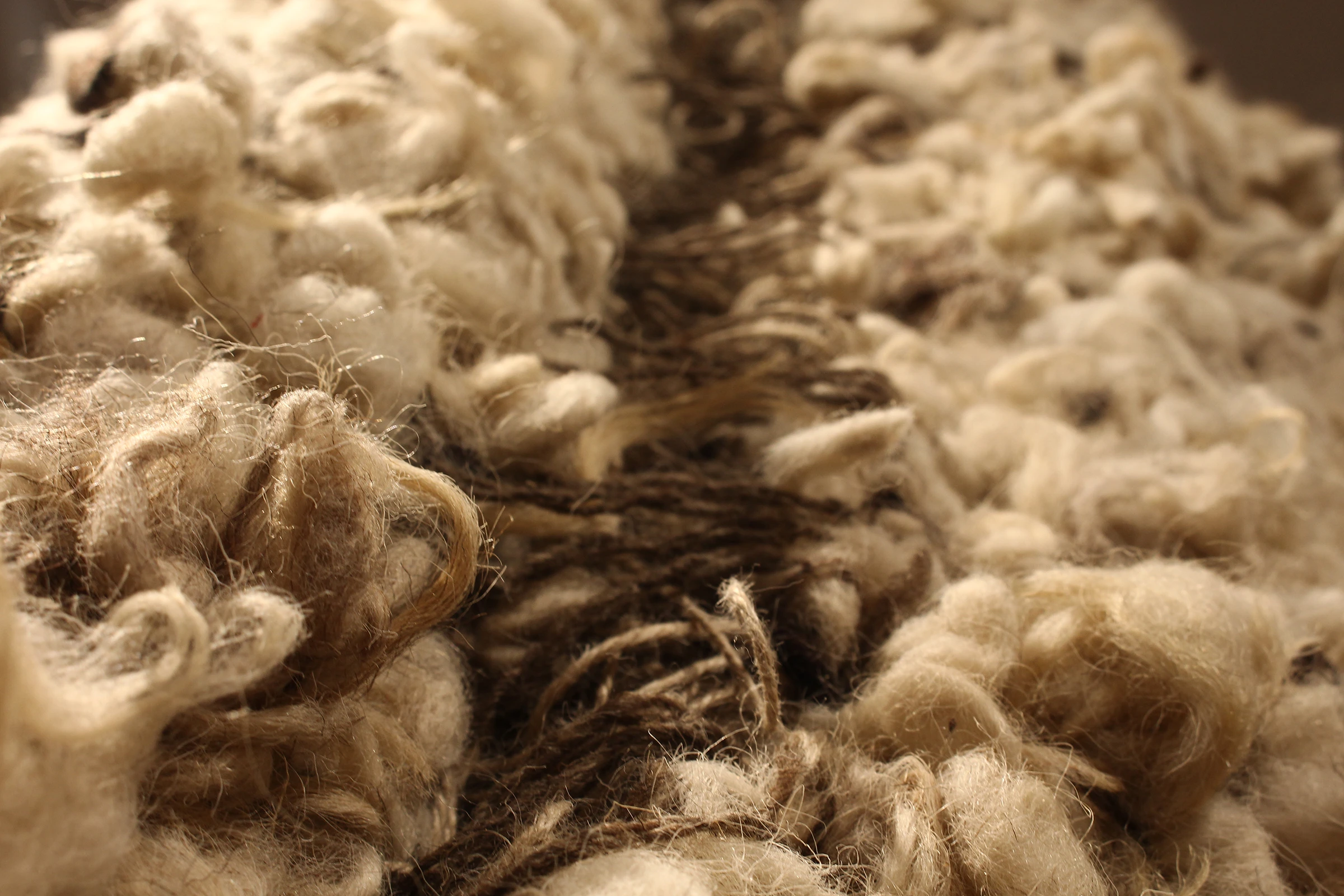
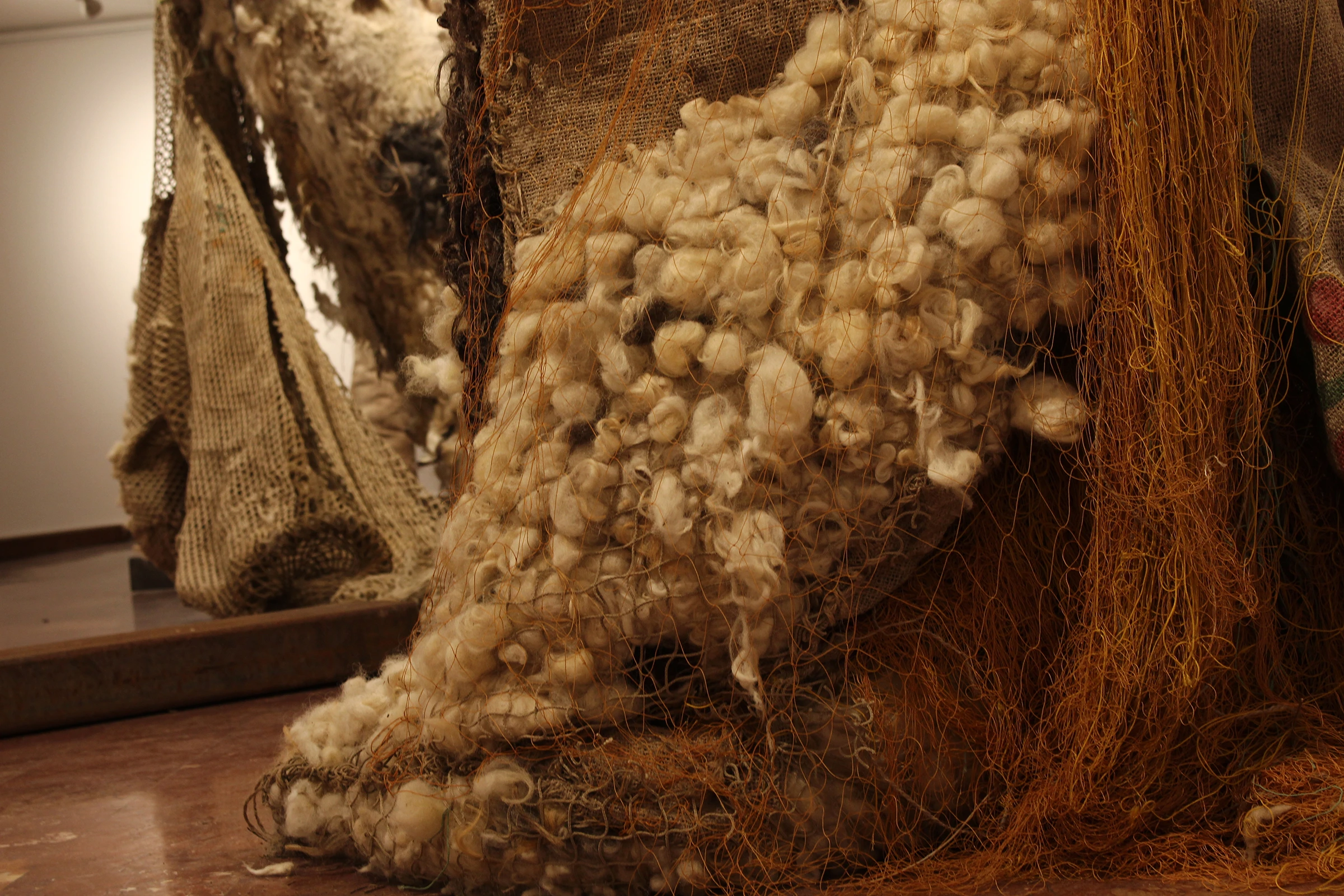
Using discarded materials which lost their primary purpose as a starting point – jute, wool, fish ing nets, rope – she builds new associative structures not being afraid of their decaying prop erties. The process of creating is essential to her, the genesis of the work – looking for the form, she discovers herself. She starts intuitively, without preliminary sketches, enters the material directly, finding it’s pulse and harmonize with its character and properties. She sews and stuffs, empties and adds, confronts the softness and warmth of the wool with rough texture of jute. The traces she leaves on them are archaic inscriptions deeply woven inside her; she is partially aware of them - they come out of her during working, like automated recordings in the form of cracks, slits, gaps and tightly closed lines and knots. Formed layers of experience, memory and emotions, Ivana projected into amorphous shapes, monumental, free, but encased; they seem to breathe, calmly and quietly, retaining or sharing their story. She sews and frees them, while completely closing the ones she’s, maybe, not willing to cope with. Each seam, created in the silence of the abandoned space, is one intimate note.
The spaces where sculptures are created and are going to be displayed, have important role in her working process, because only in relation with them, their complexity becomes significant. That is to say, the energy of the space where they are created – the deserted military complex in Montenegro as a place of contemplating about fleetness, is woven into them. The new one is going to be woven through interaction with spectators who are given the liberty of interpre tation.
That way, the line which the artist subtly connects from something abandoned, left to decay and something that naturally deteriorates - with new life energy, meaning and purpose made by creating art, and also, new levels of meaning generated when making contact with her works, stays open for continuous flow. For new intertwining of fading into oblivion and creat ing, transience and permanence…
Ana Ivanović,
Art historian
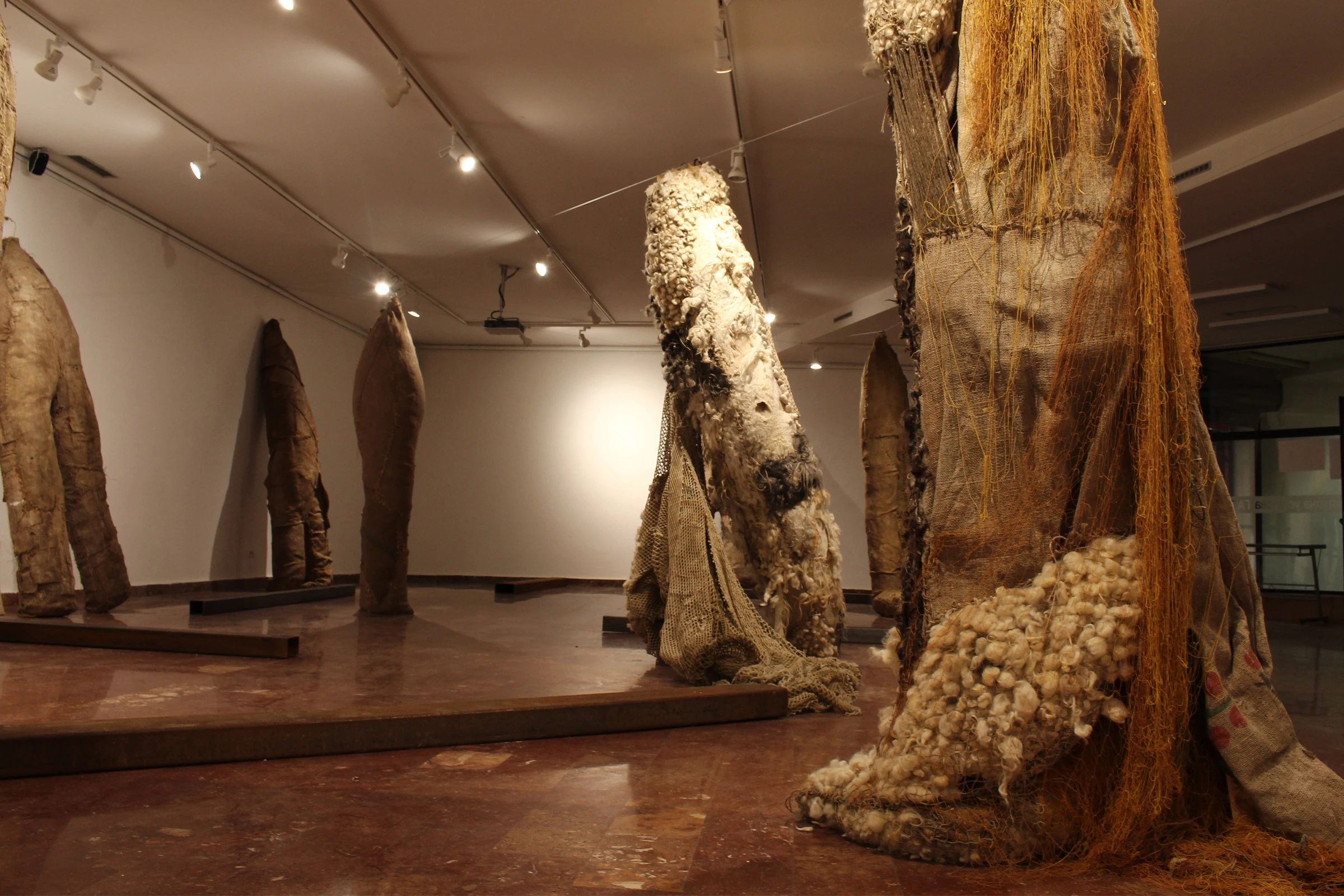
photo gallery